


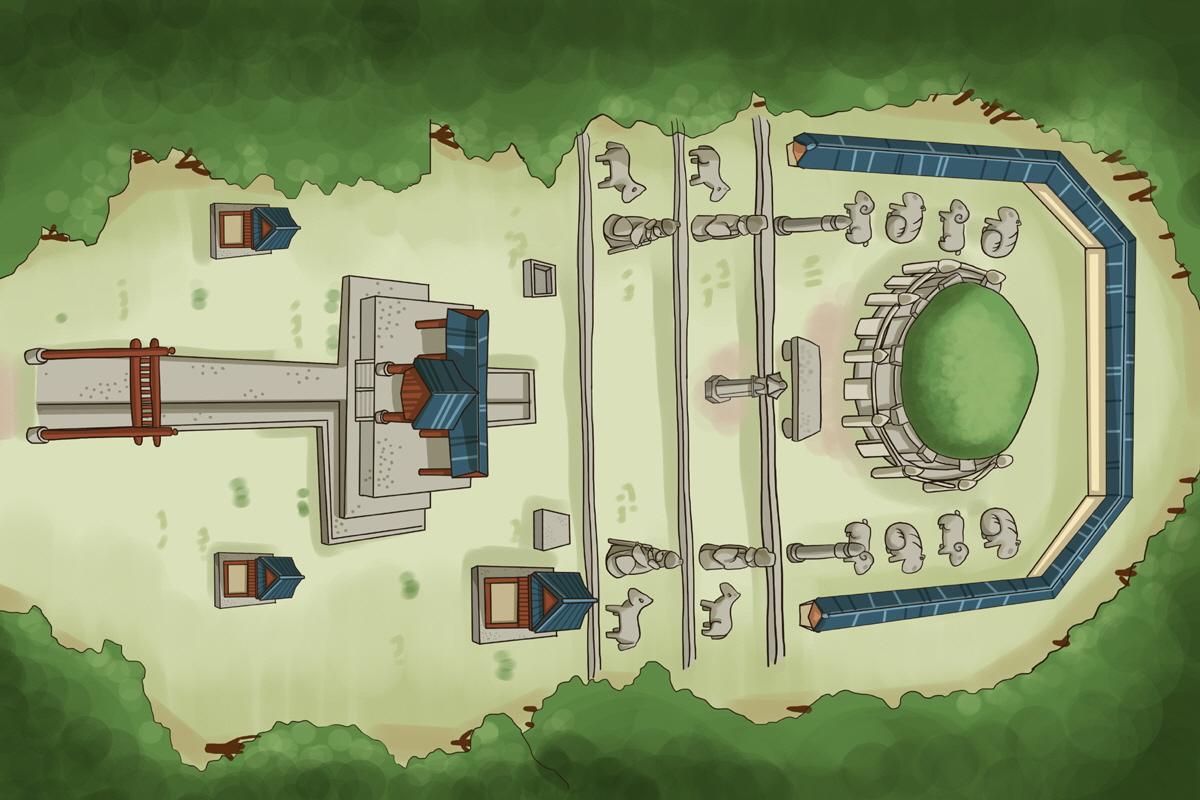
A Road to a Royal Tomb of the Joseon Dynasty
Each of Joseon’s royal tombs consists of three sections.
The first section of the tomb precincts covers the space from the outer entrance to Hongsalmun, or Red Arrow Gate. It marks the boundary between the two realms, the sacred and the profane.
The section contains a passageway leading to the burial mounds, and this passageway gently winds itself to preserve the burial mounds from the visitor’s view. The gate standing at its end was painted red, because the color was believed to help repel evil forces from the sacred burial grounds.
The second section is where annual ancestral rites are held.
Here at the gate begins the two-lane path leading to the tomb’s shrine called Jeongjagak. The raised lane was intended for the sprit, while the lower lane was for the king.
There are two buildings on both sides of the lane. One is a kitchen where offerings were prepared, and the other is a guards’ house. The path ends at the shrine, where the ancestral rites took place.
The third section is located at the innermost, loftiest part of a royal tomb and is marked by either one or two burial mounds. Each mound is typically protected by stone statues of guards, court officials and animals, and furnished by a variety of stone objects used in the ancestral rites held here.
Royal Tombs of the Joseon Dynasty 4
@Registered by : KOREA TOURISM ORGANIZATION