


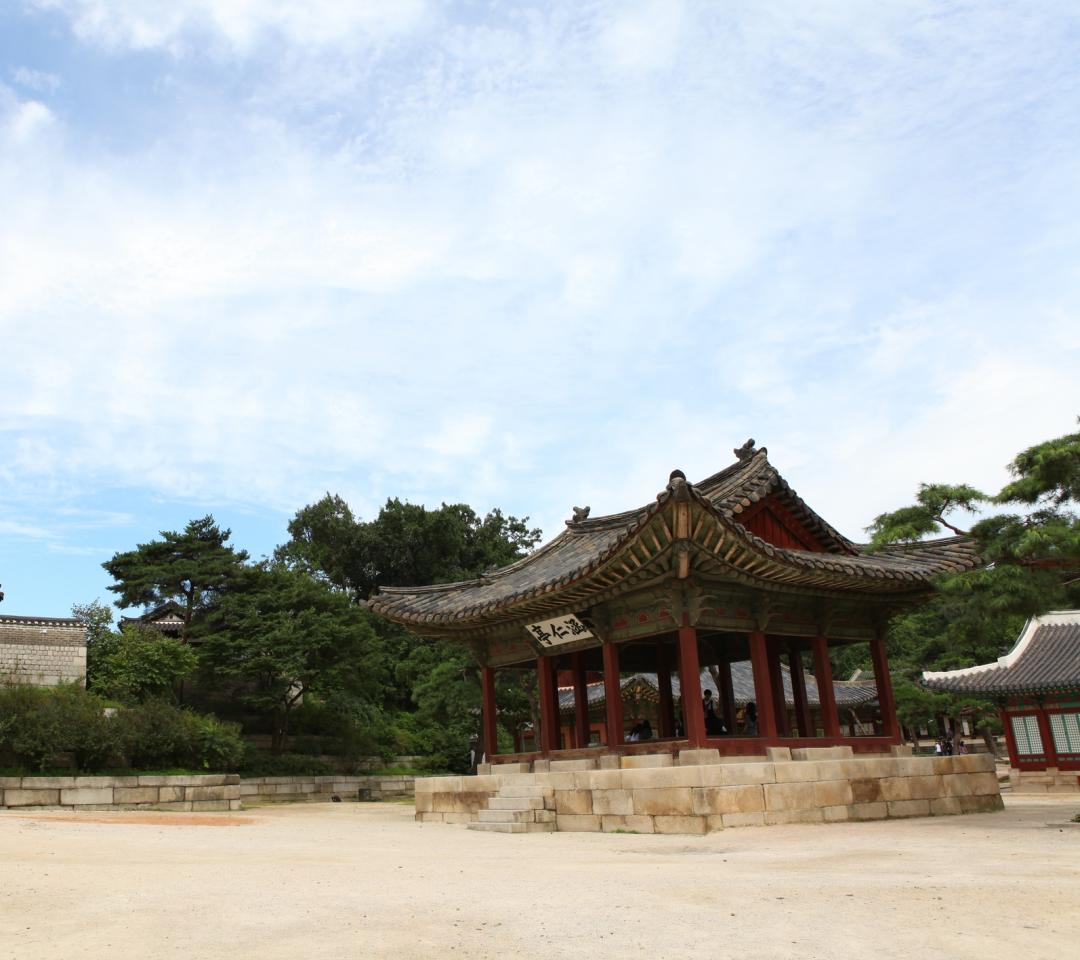
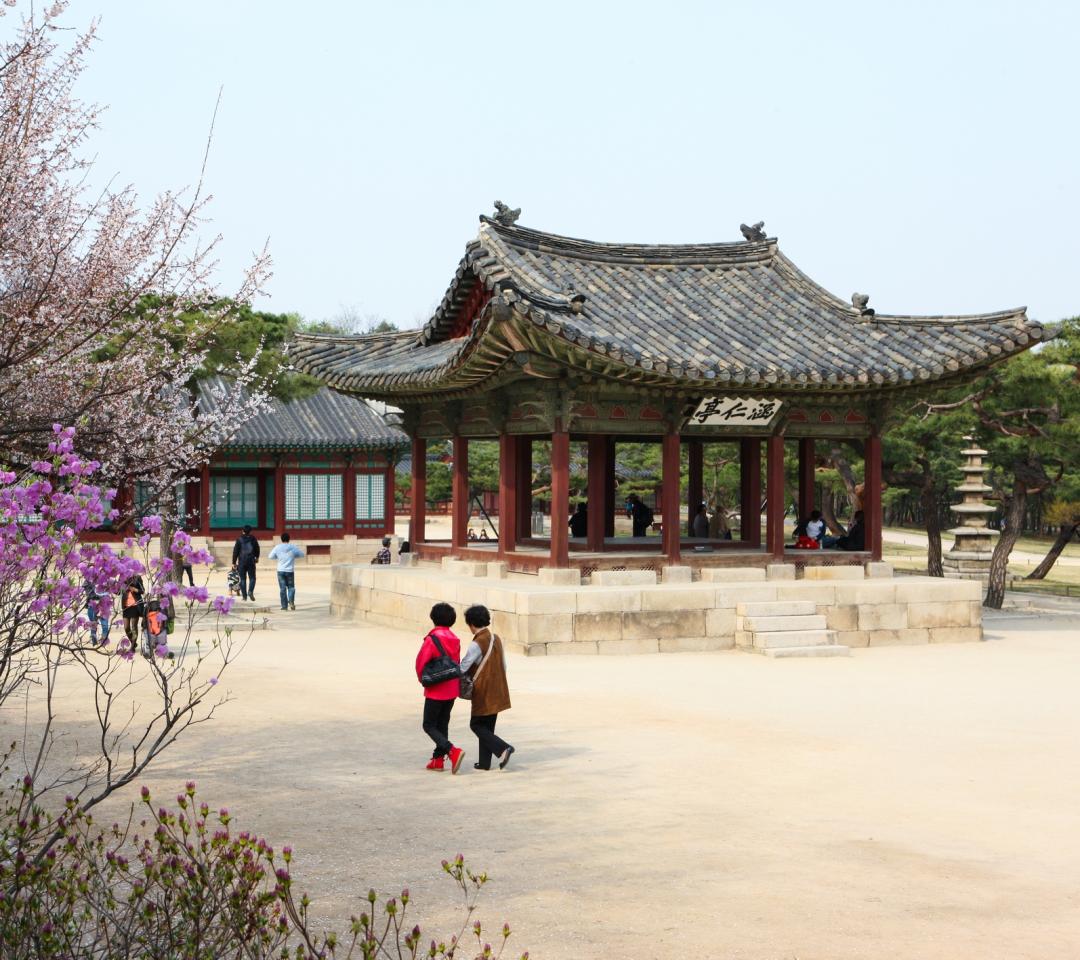
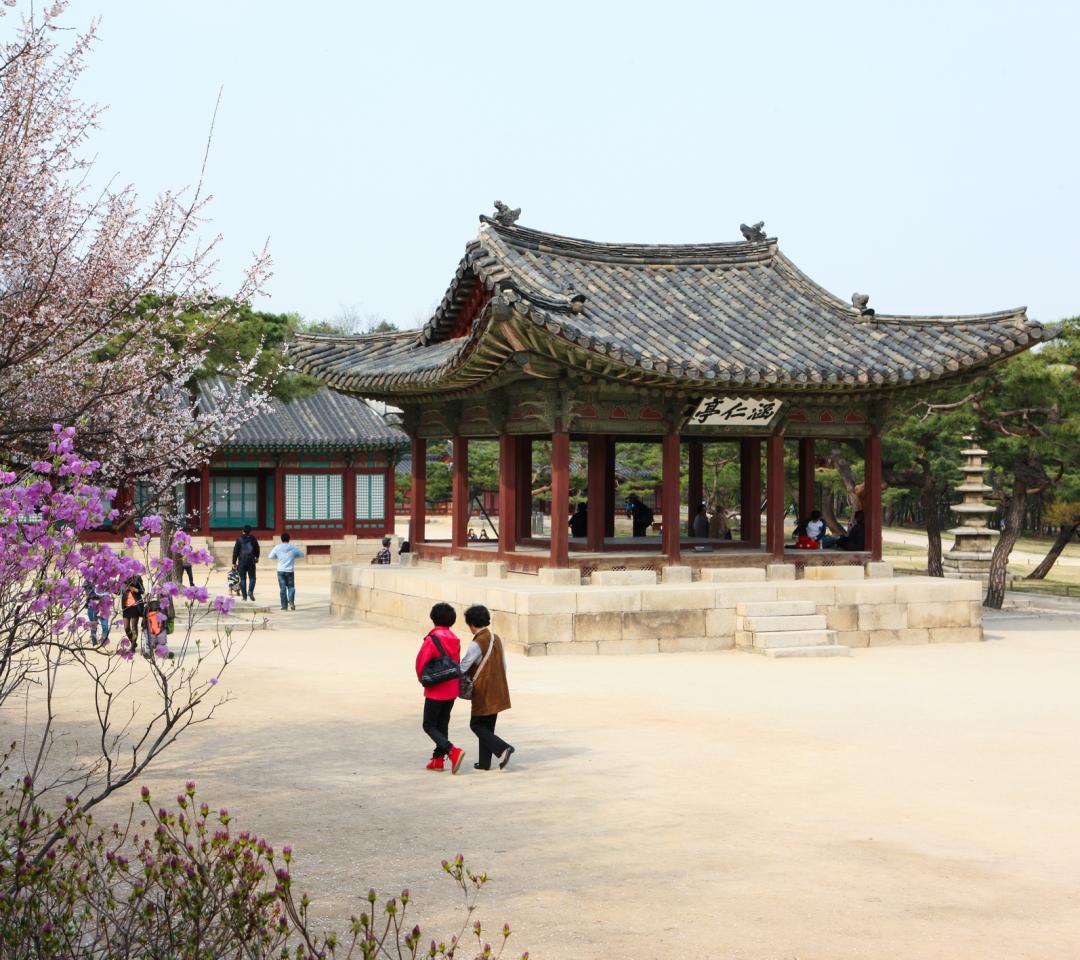
Haminjeong Pavilion faces the south, with a large yard in front of it. It is said many Joseon kings were fond of the pavilion as its scenery under the sunlight is impressive, especially King Yeongjo and King Jeongjo.
There was a hall located on the site of Haminjeong Pavilion, which was the Inyangjeon Hall. However, it was destroyed during the Japanese invasion of Korea in 1592. After that, King Injo demolished and relocated the buildings of Ingyeonggung Palace, built by Gwanghaegun, and rebuilt Changgyeonggung Palace in 1633. Haminjeong Pavilion was also built with the halls brought from Ingyeonggung Palace on the current site. However, it was burned down in 1830 and was later rebuilt to its current appearance in 1834.
The later-built Haminjeong Pavilion was used for various purposes. The king attended lectures on Confucian classics in the pavilion. Also, the king met and sent congratulations to the young talents here who passed the state examinations. He held conferences on Chinese classics to discuss with his subjects, such as “The Doctrine of the Mean” and “Classics of the Mind”. The current Haminjeong Pavilion has no walls and is open to all sides, but it originally had walls on three sides, as shown in Donggwoldo, the “Painting of Eastern Palace”.
Haminjeong Pavilion (Changgyeonggung Palace)
@Registered by : KOREA TOURISM ORGANIZATION