


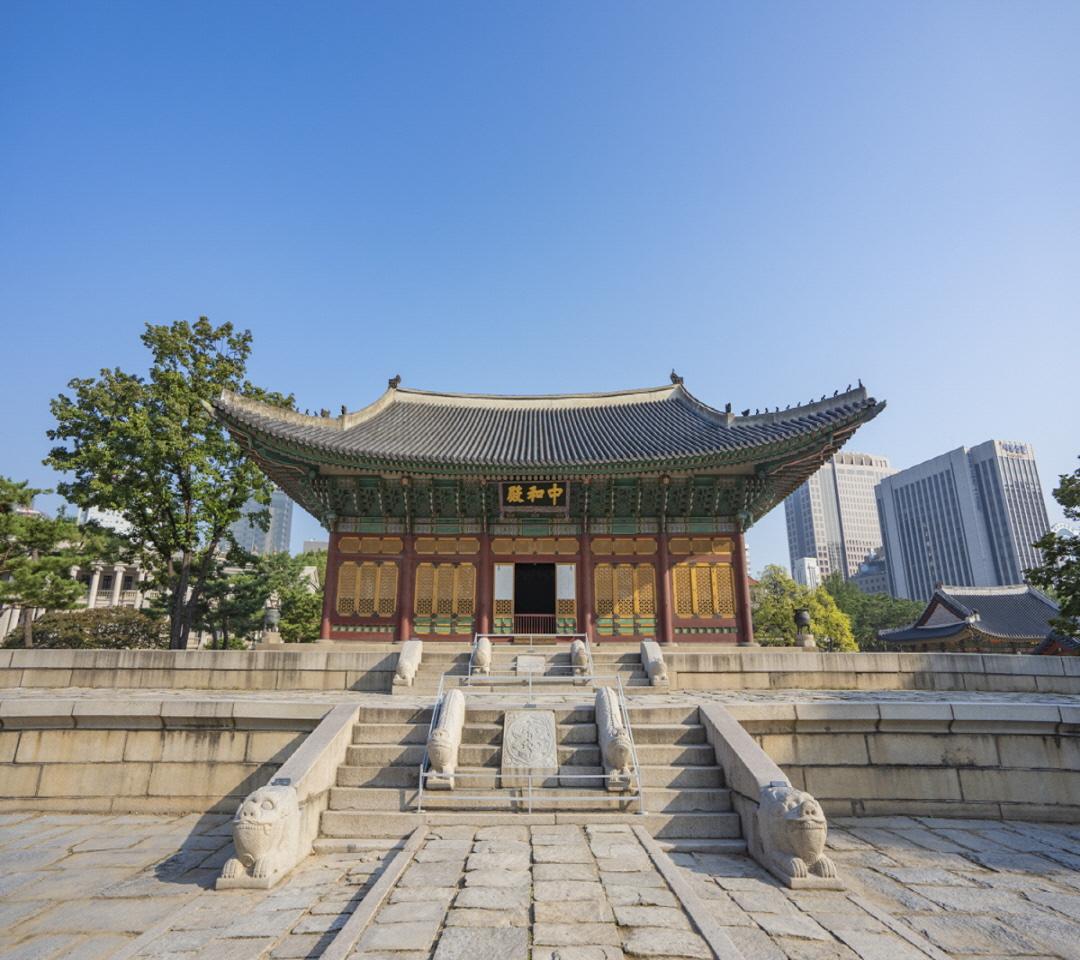
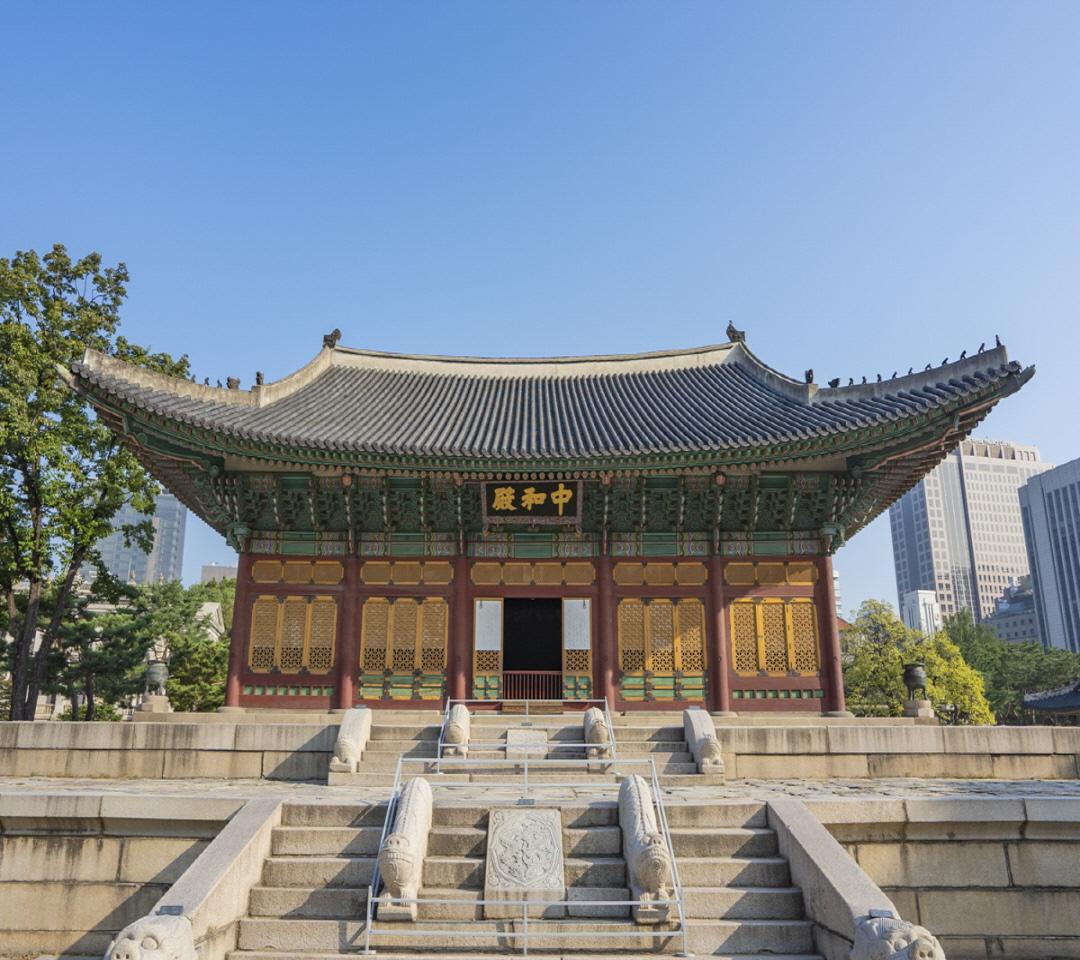
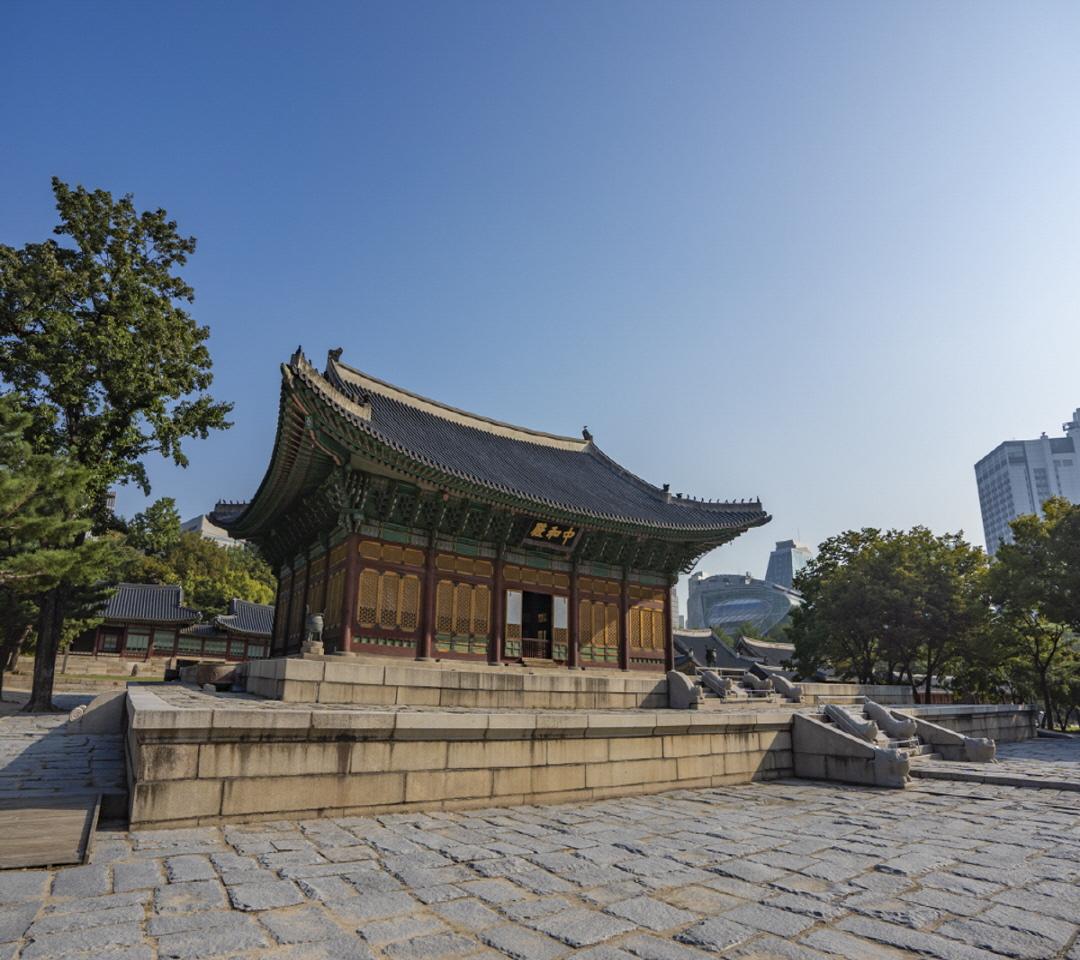
Junghwajeon Hall is the main hall of Deoksugung Palace. Its name shares the same meaning as Junghwamun Gate, which means “the righteous mind of not being biased”. It served as the office hall for the king to conduct state affairs, meet his subjects, and greet important envoys from foreign countries. It was also a place to hold enthronement ceremonies.
Junghwajeon Hall was built in 1902 together with the Junghwamun Gate. Unfortunately, it was burned down in 1904 and rebuilt during the reign of Emperor Gojong. Emperor Gojong successfully processed his modernization projects and intentionally built the hall building to show his authority. The name of the gate also reflected his hope for the Korean Empire that it could maintain its independence and peace among other great powers.
Junghwajeon Hall was originally constructed as a two-story building to show the dignity of the Korean Empire. After the great fire in Deoksugung Palace, the current hall building was rebuilt as a one-story building. It has a hip and gable roof called Paljakjibung, and the Gongpo supporting the eaves of the roof is set up on and between the pillars. The architectural style of the building is known as the Dapo style, which is the multi-cluster bracketing style. Looking inside the hall, its ceiling is decorated with two dragons, symbolizing the imperial family of the Korean Empire and their dignity. Also, behind the throne between the pillars, there is a folding screen featuring the sun, moon, and five mountains, which is called the “Irwoloakdo”, representing the wish for the nation to be prosperous under the rule of the king.
Although Junghwajeon Hall was slightly different from its original form after the fire in the palace, we can still see the characteristics of the late Joseon Dynasty in its architecture style and name.
Junghwajeon Hall (Deoksugung Palace)
@Registered by : KOREA TOURISM ORGANIZATION