


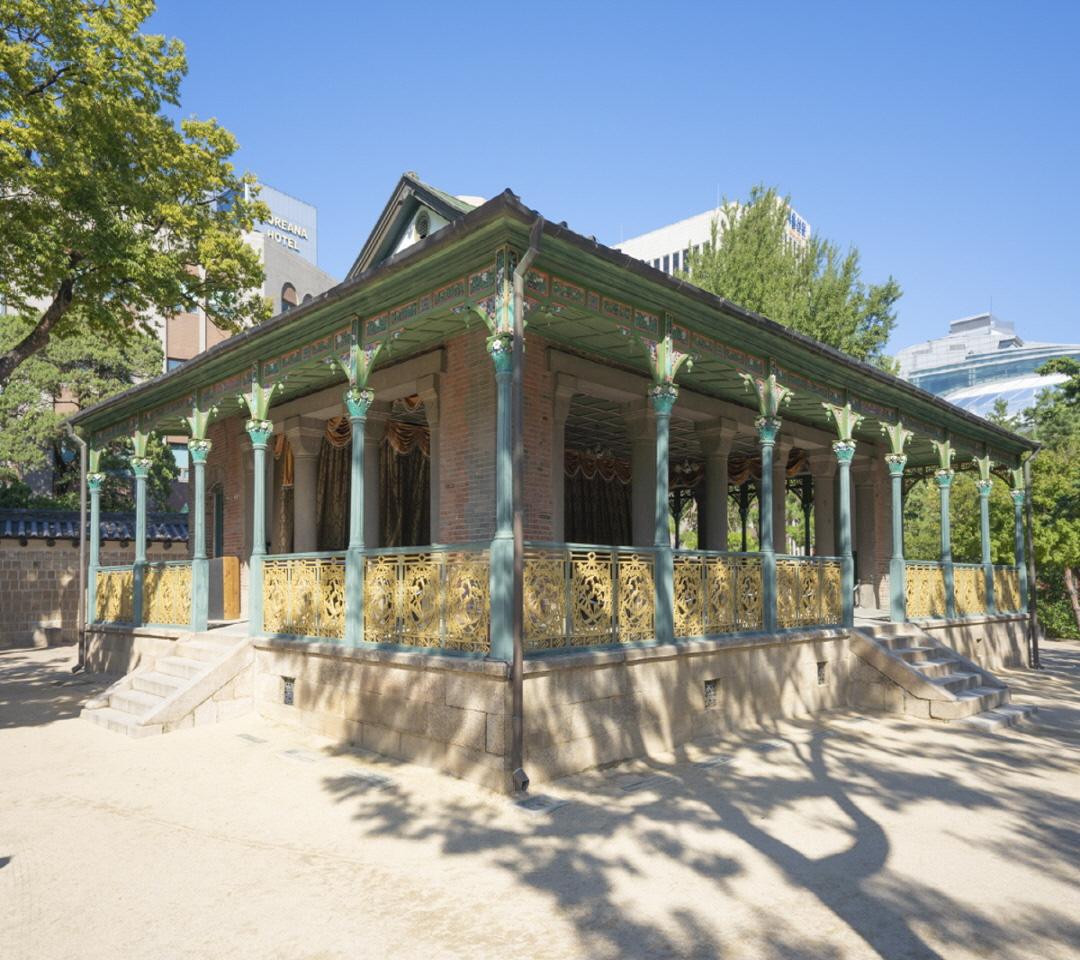
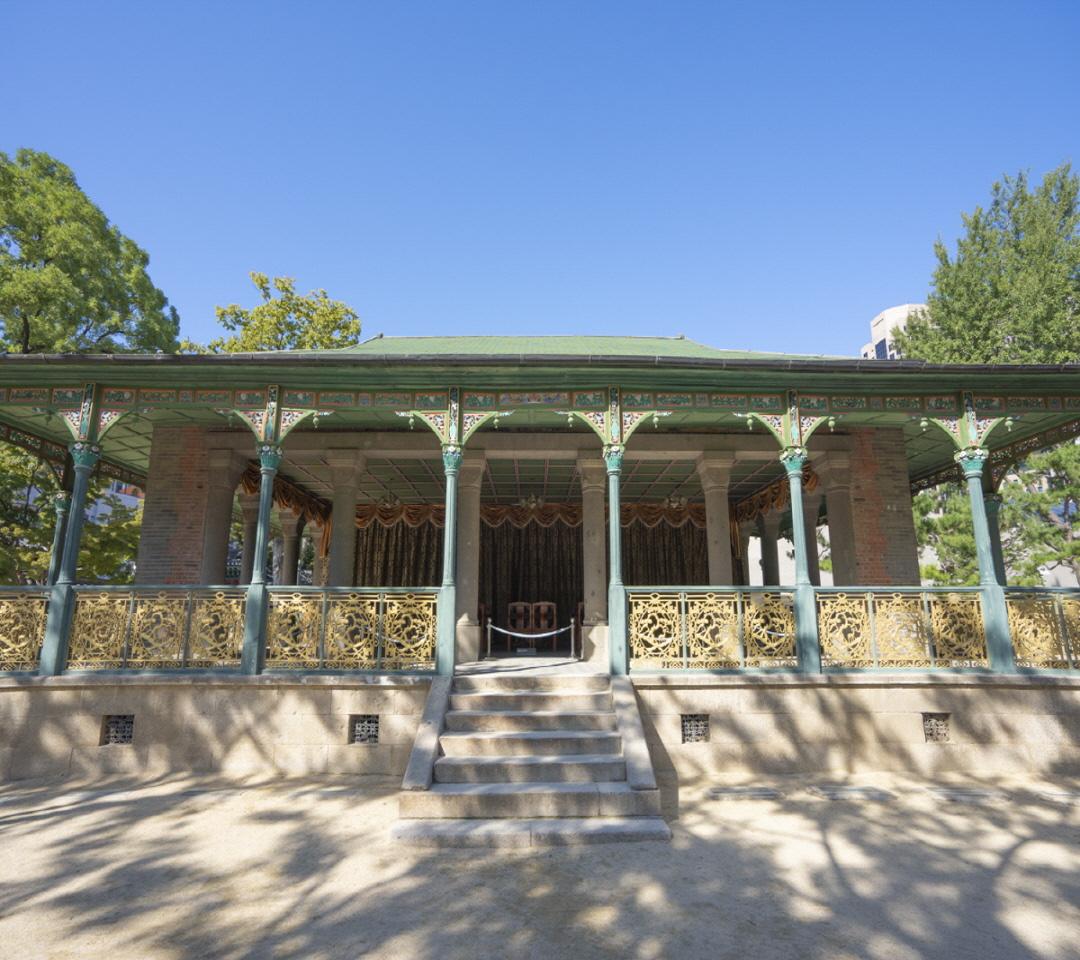
Jeonggwanheon Hall is the exclusive relaxing and entertaining place for the imperial family of the Korean Empire. It is the only building in Deoksugung Palace whose name ends with "heon,” which is usually used to name an annex or separate house. Its name, "Jeonggwan," is interpreted to mean "look ahead quietly." According to historical documents, it was also used as a repository for royal portraits.
Most of the buildings in Deoksugung Palace were destroyed by the great fire in 1904. However, Jeonggwanheon Hall survived the fire, and the original appearance built in 1900 was well preserved until now. Therefore, it is the oldest existing modern building in Deoksugung Palace.
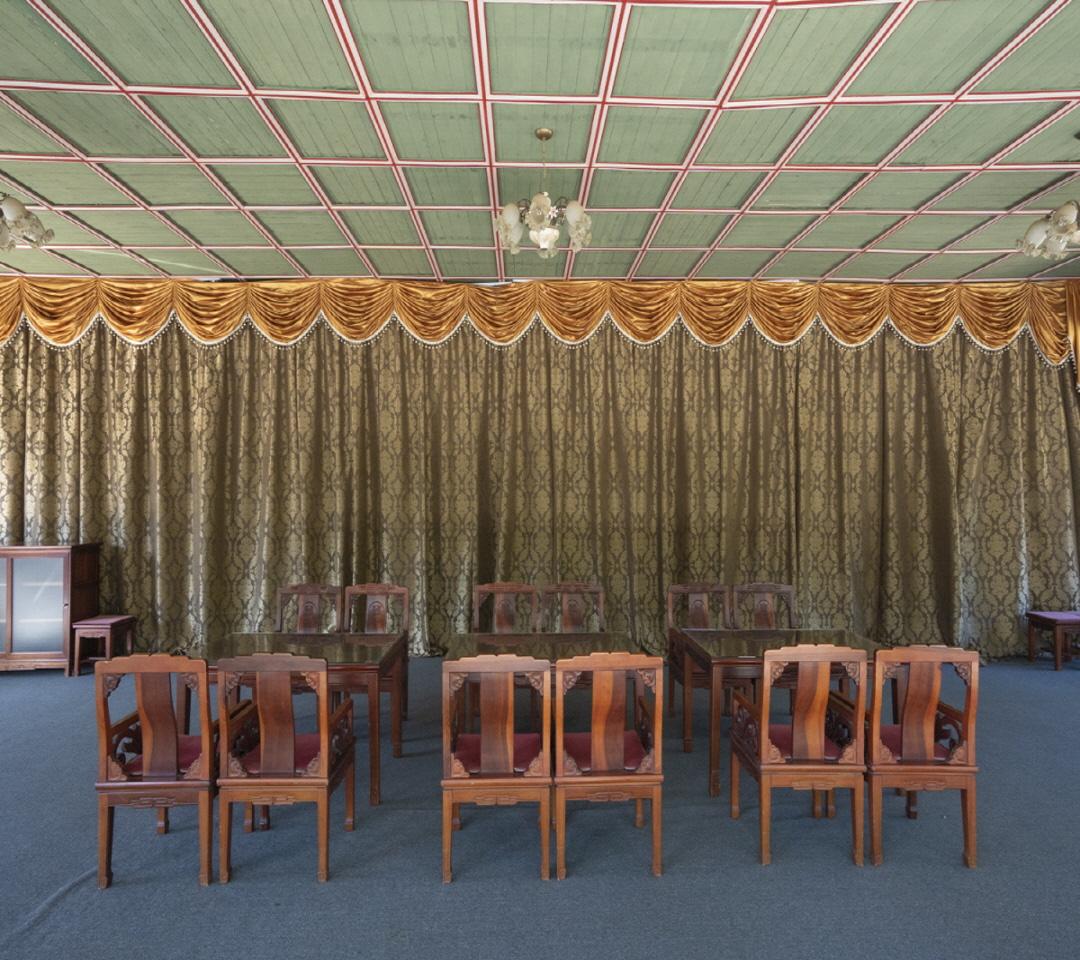
Jeonggwanheon Hall has a unique architectural style. The building is a fusion of Korean and Western styles, which combine the traditional Korean roof with Western pillars. Except for the small space with a wall and a gate behind Jeonggwanheon Hall, the remaining space is visible from the outside. It is assumed that the space was used to prepare items or store tools instead of as a room due to its small size.
Looking inside the hall, the inner part is surrounded by brick, and the exterior decoration is designed with various animals and plants that symbolized different meanings in ancient times. A bat symbolizes happiness, a deer symbolizes longevity, a pine tree symbolizes longevity, and a dragon symbolizes the emperor. The hidden meaning of bats and grapes is a blessing on future generations.
Jeonggwanheon Hall (Deoksugung Palace)
@Registered by : KOREA TOURISM ORGANIZATION