


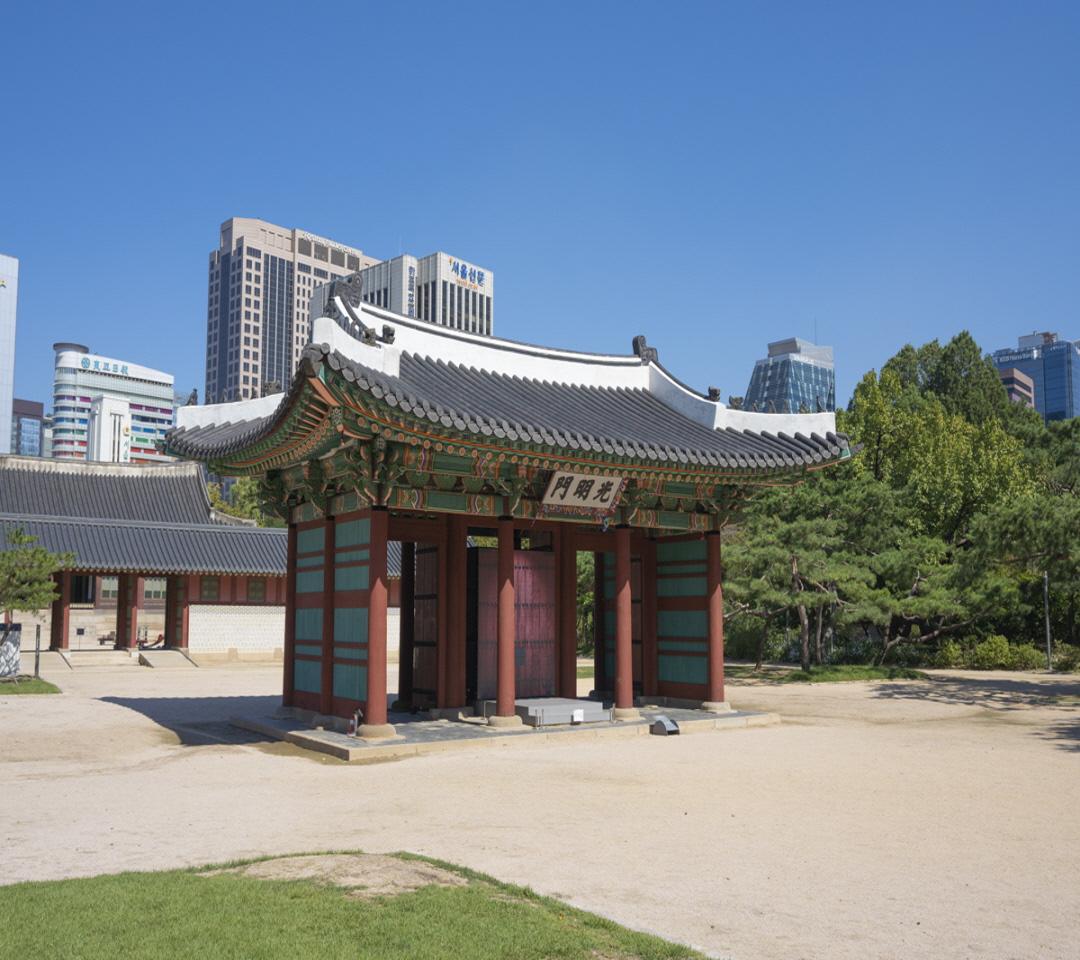
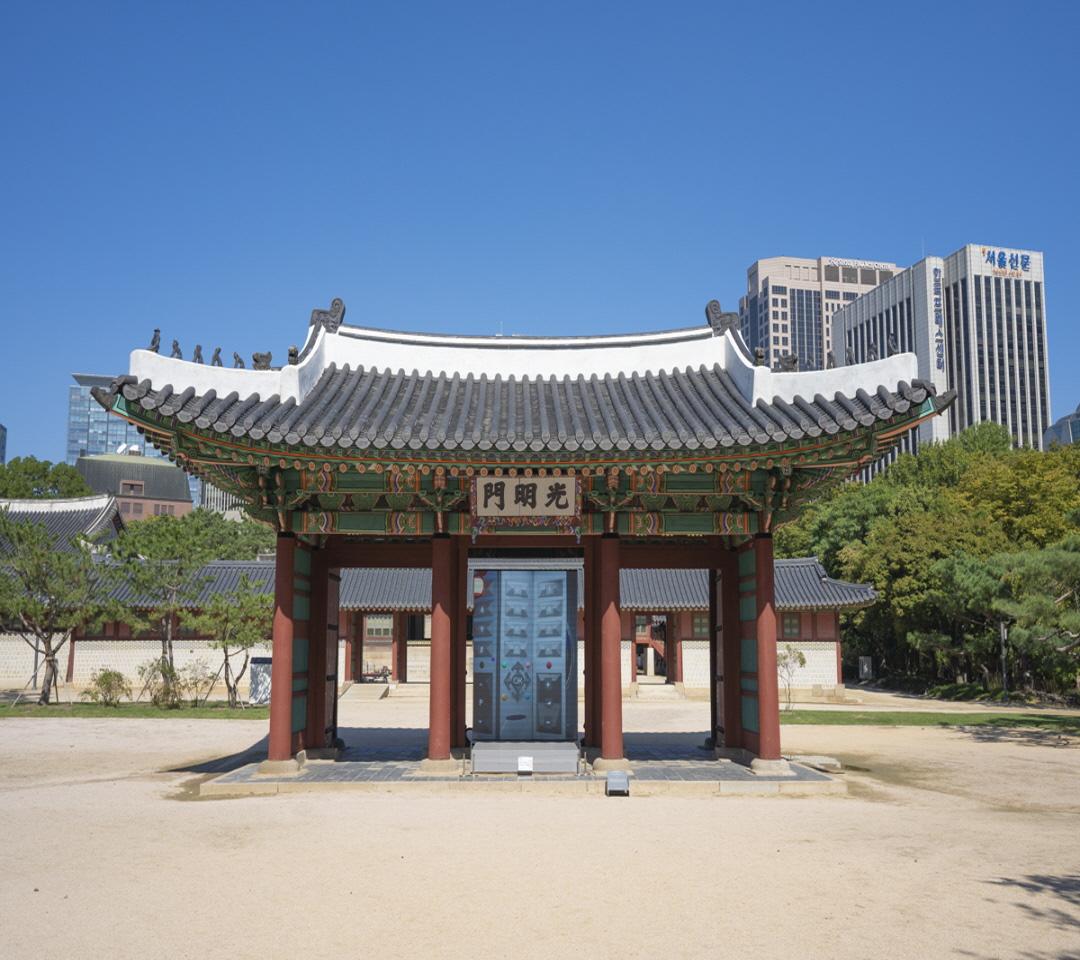
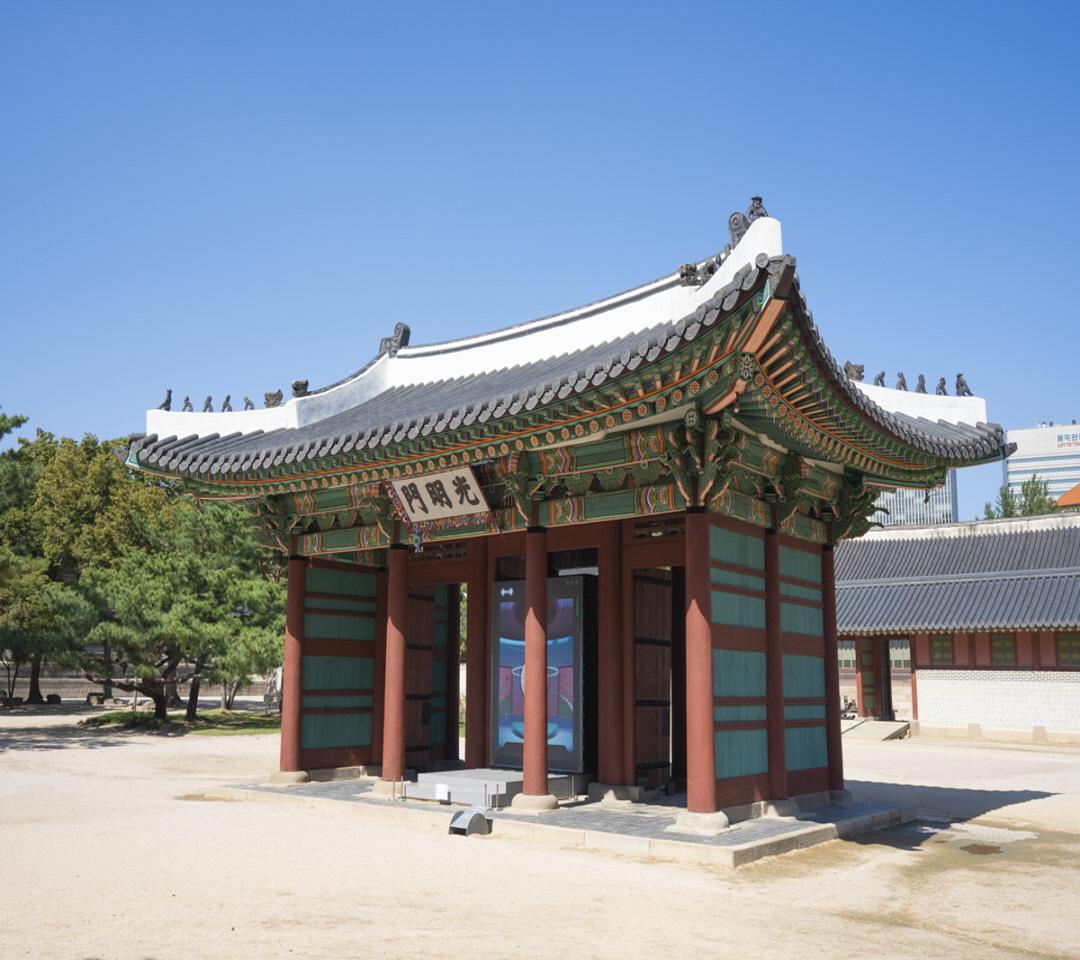
Gwangmyeongmun Gate served as the entrance to Hamnyeongjeon Hall, the residence hall of Emperor Gojong, who was the first emperor of the Korean Empire. When Emperor Gojong passed away at Hamnyeongjeon Hall in 1919, his coffin was taken out through the gate.
Gwangmyeongmun Gate was recently moved back to its original location and served its own role. However, it was relocated to play another role until 2016. During the Japanese colonial era, many buildings in Deoksugung Palace were demolished and moved from their current location to the southwest of Junghwajeon Hall. After the relocation, it was used as the entrance to the outdoor exhibition hall. Unfortunately, it returned to its original site as part of the restoration project that began in 2016.
Generally, the gates to the hall of the palace were built in a straight line in front of the hall. But if you look closely, you'll notice that Gwangmyeongmun Gate isn't quite aligned with the Hamnyeongjeon Hall that was constructed behind it. It was confirmed during the 2016 excavation of Deoksugung Palace that the stylobate was not aligned with the hall. In addition, Gwangmyeongmun Gate can be seen in its current spot on a map of Deoksugung Palace from the 1900s. Therefore, although it may look weird as an entrance gate that is out of line with the hall behind it, it was still moved back to its old site.
Gwangmyeongmun Gate (Deoksugung Palace)
@Registered by : KOREA TOURISM ORGANIZATION