


Excavation Site in Daesin-ri, Hwasun
[Cultural Commentator]
"The Excavation Site in Daesin-ri, Hwasun was dug up in 1999 to determine the characteristics of the dolmen site in Hwasun. The site where the excavation site was located used to be an ordinary rice field. In 1995, the dolmens in the Hwasun region were first discovered and reported to the academic community, which later led to an excavation survey."
[Tourist]
"How many dolmens have been found by the excavation survey at the excavation site in Daesin-ri?"
[Cultural Commentator]
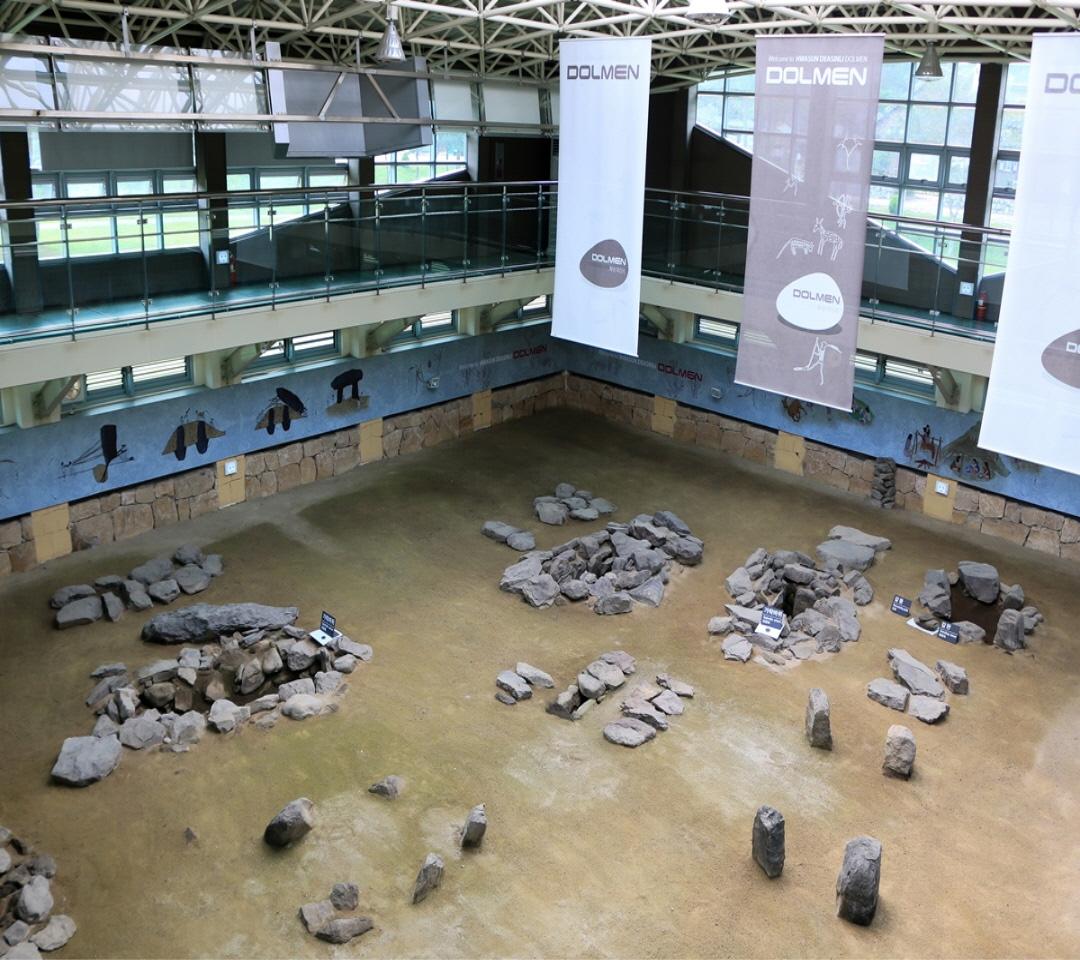
"35 dolmens were excavated at the excavation site in Daesin-ri, Hwasun. Among them, four dolmens at the entrance to the protecting canopy were excavated and restored to their original form. They are also used for educational purposes because they maintain their original form.
[Tourist]
"What is on display inside the protecting canopy?"
[Cultural Commentator]
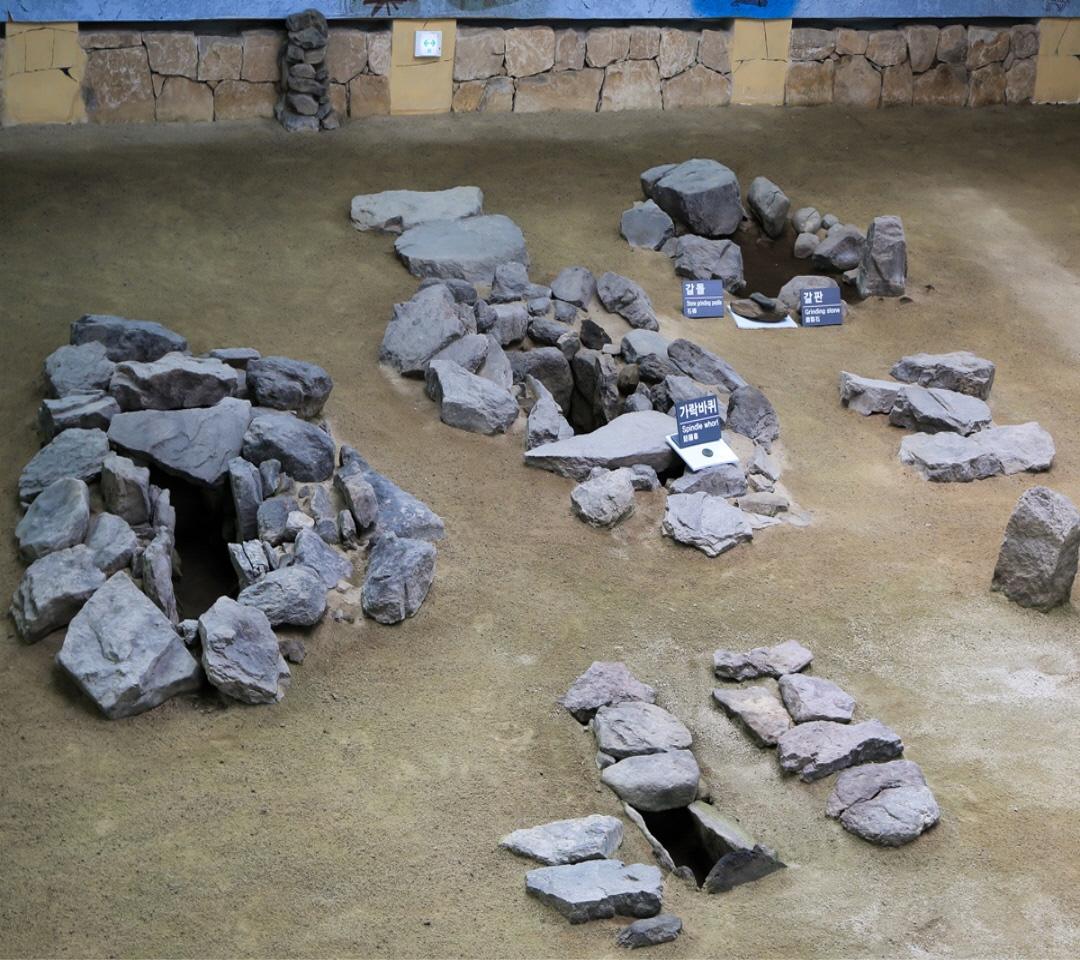
"Inside the protecting canopy of the dolmen excavation site, you can examine the structure and shape of the burial chamber of dolmens."
[Tourist]
"Is there only a burial chamber?”
[Cultural Commentator]
“No. In addition to the burial chamber, there are also artifacts found during the excavation. The burial chamber is preserved to maintain its original form, and the artifacts found include the ring wheel, grinding stone, grinding slab, undecorated pottery, and the stone arrowheads."
[Tourist]
"What is a ring wheel?”
[Cultural Commentator]
"The ring wheel is also known as Bangchucha, which is the most primitive type of spinning wheel, where short fibers are connected through back twists to form a long thread, or where long fibers are twisted to form a thread. The ring wheel had a round hole in the center, and through that hole, a rod that would serve as the axis of the wheel was inserted and fixed to make threads. The fact that the ring wheel was found inside a dolmen shows that clothing was made and worn in those days."
[Tourist]
"What about the grinding stone?"
[Cultural Commentator]
"The grinding stone is also known as Seokbong, and it is a stone tool that is paired with the grinding slab to peel or powder grains, wild fruits, etc. through reciprocating motions.
[Tourist]
"Where are the capstones that used to be on top of the burial chambers?”
[Cultural Commentator]
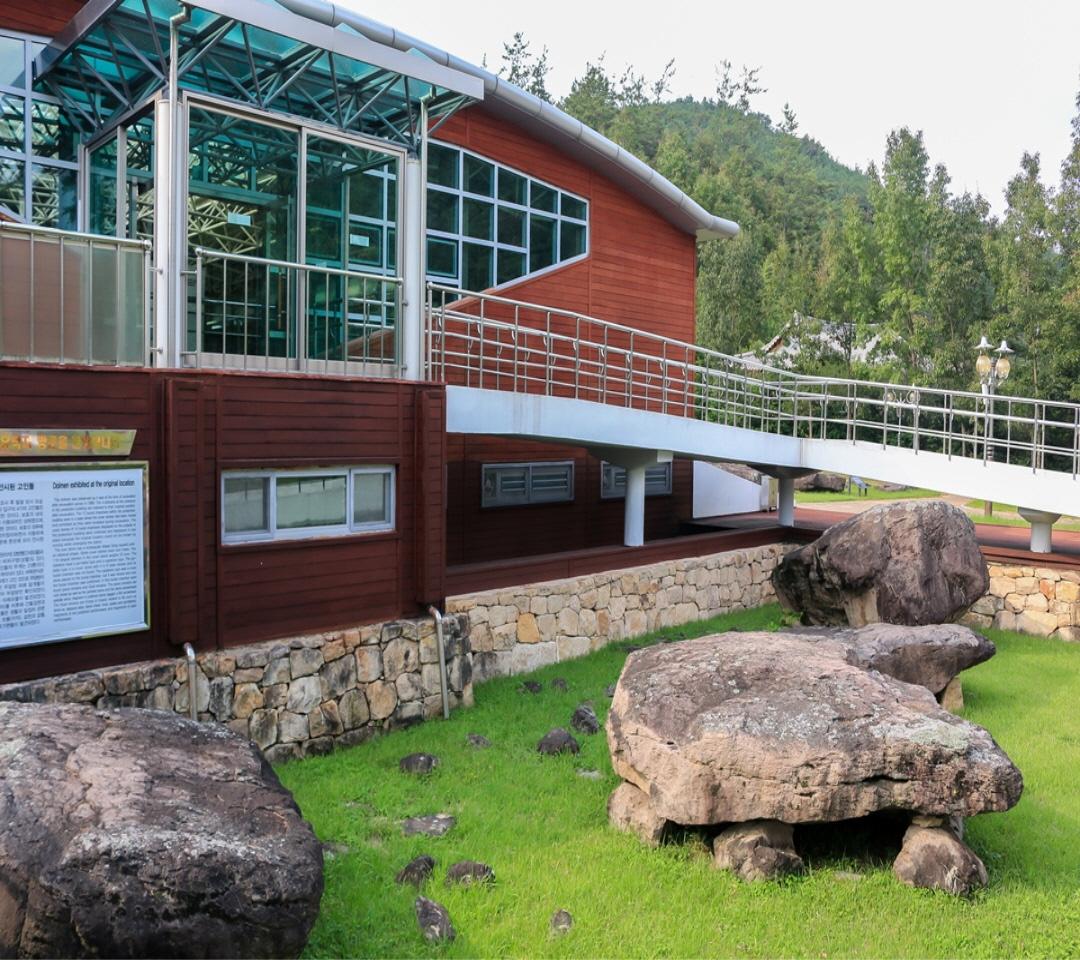
"If you look to the right side of the protecting canopy at the Excavation Site in Daesin-ri, Hwasun, there is a place where dolmen capstones are gathered and displayed. In 2008, when the protecting canopy was built, the capstones were collected in one place, instead of being restored to their original state, in order to provide a first-hand view of the burial chambers inside the canopy."
[Narration]
The Excavation Site in Daesin-ri, Hwasun has very important academic value in studying the meaning of distribution of dolmens and the process of their transformation.
Excavation Site in Daesin-ri, Hwasun
@Registered by : KOREA TOURISM ORGANIZATION