


Hwasun Dalbawi Dolmen
[Man]
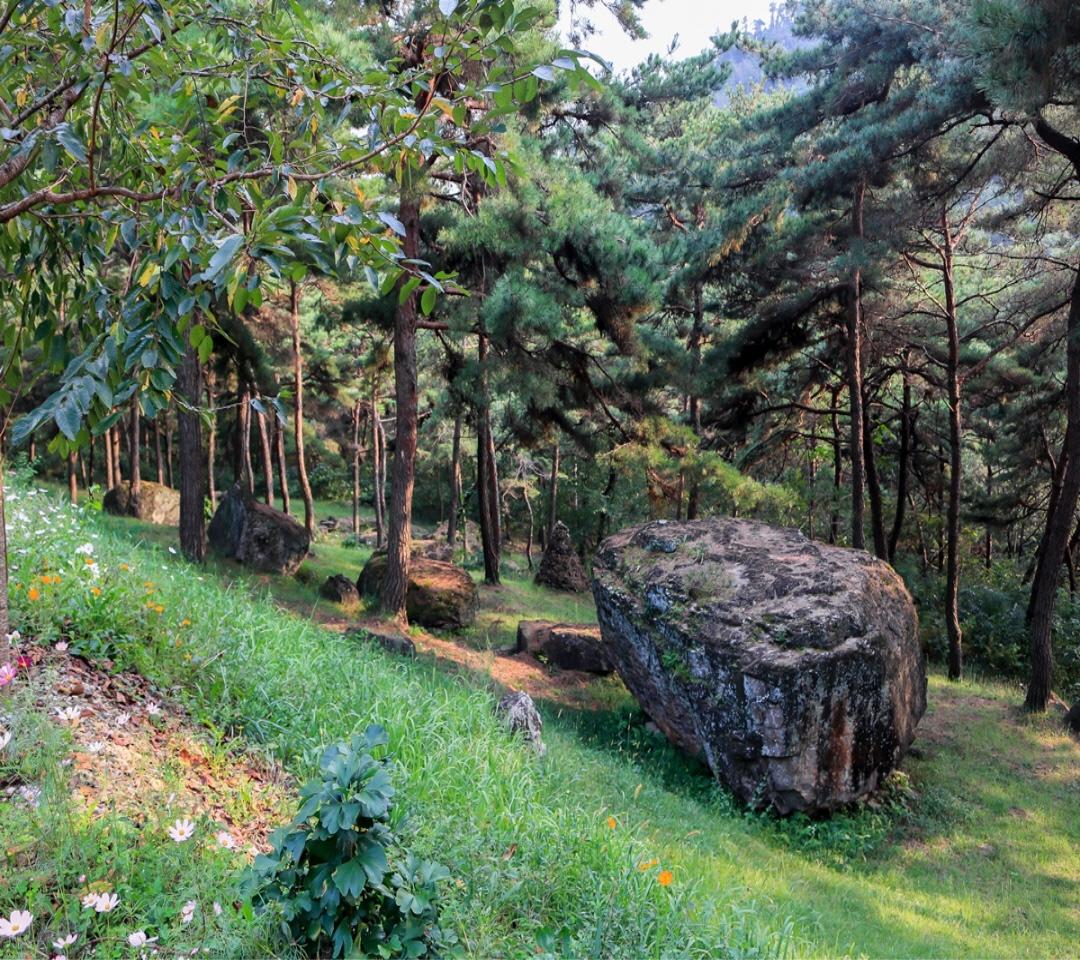
The Dalbawi Dolmen is located between Bogeomjae and the Gwancheongbawi Dolmen area.
[Commentator]
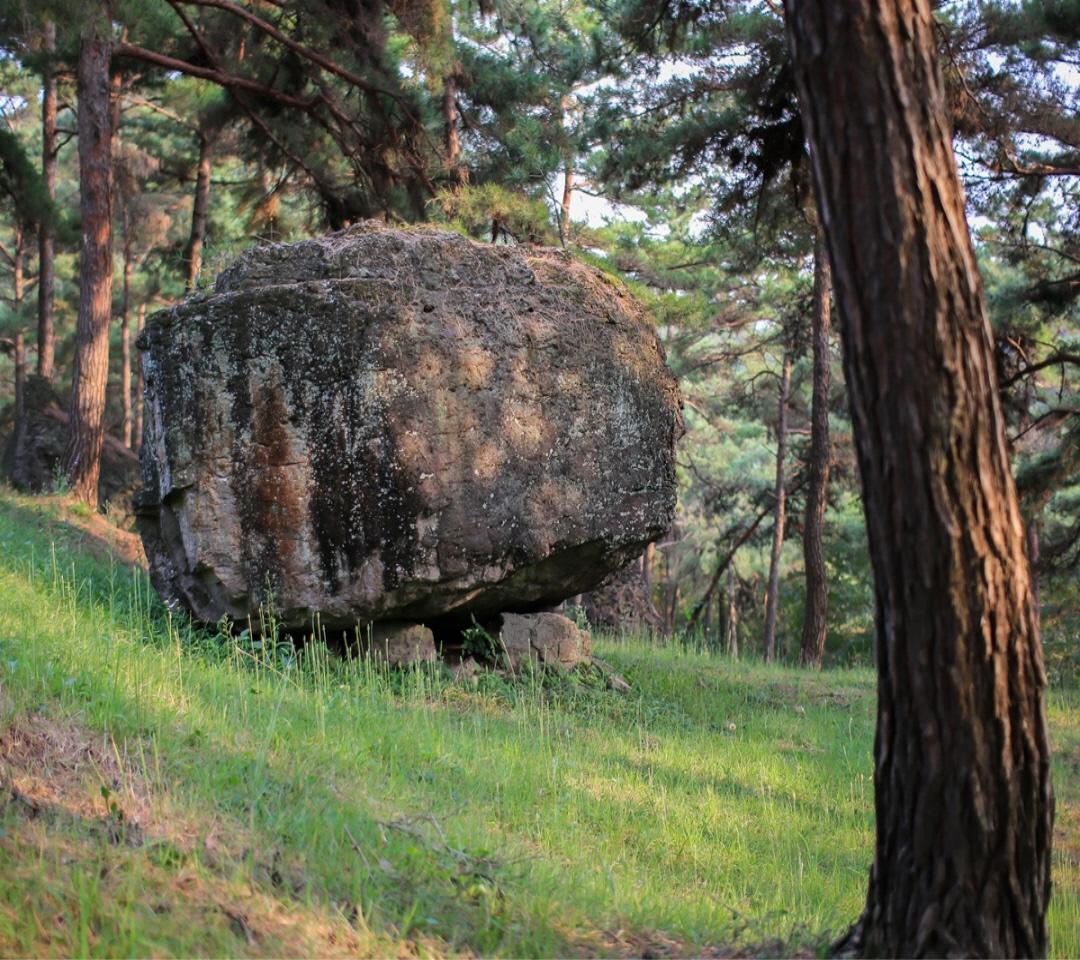
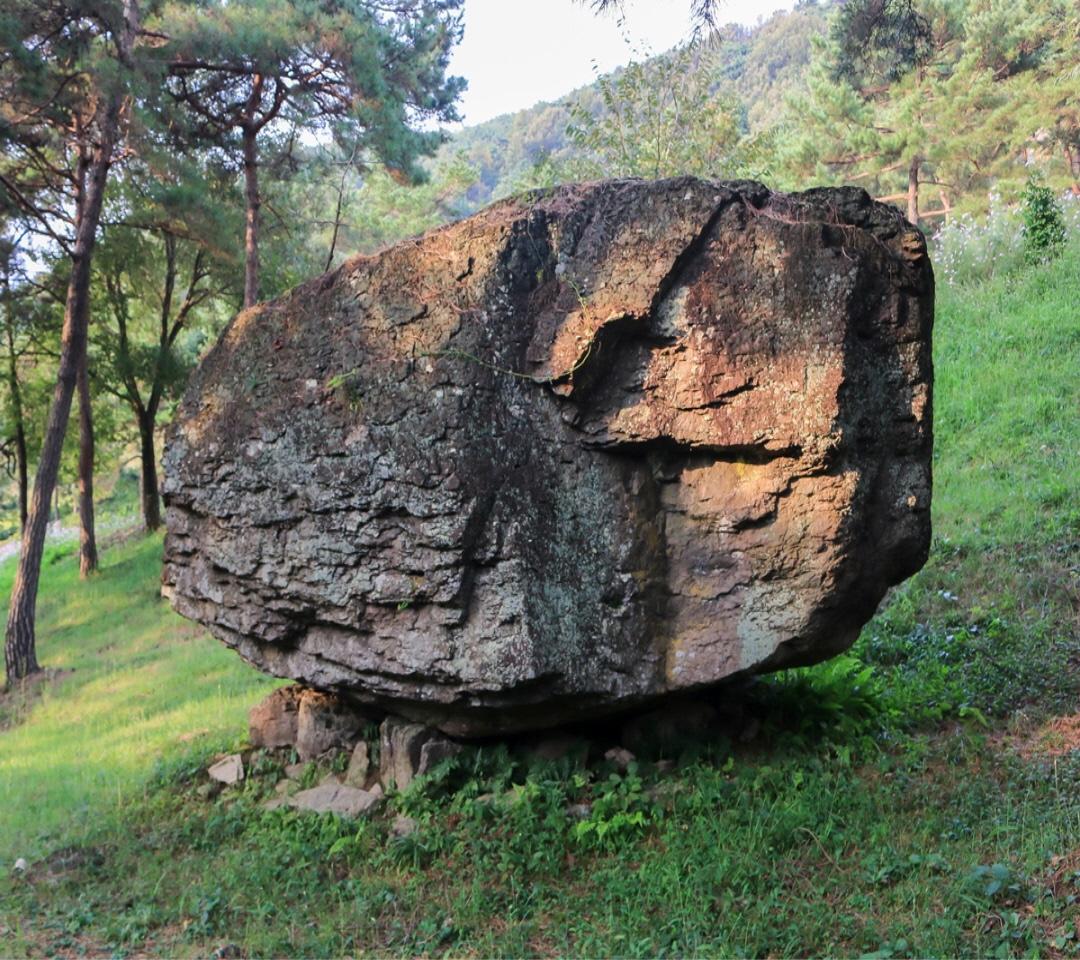
"Many dolmens and rocks are scattered at the foot of the mountain heading south along the road stretched between Hyosan-ri, Dogok-myeon and Daesin-ri, Chunyang-myeon. Long ago, people would pass through this place to travel from Boseong to Naju. They named it Dalbawi due to its shape. Because it resembled a full moon. Thus, this dolmen began to be called the Dalbawi Dolmen.”
[Tourist]
"Sir. This dolmen is quite huge, isn't it?"
[Commentator]
"Yes, that's right. It is 5.56 meters long and 3.96 meters wide. This dolmen measures 1.98 meters in height. The Dalbawi Dolmen stands on its own, away from other dolmens."
[Tourist]
"I see. Could you tell us why?”
[Commentator]
"It is presumed to have been used as a monument to symbolize the graveyard of a group with blood ties. That means the Dalbawi Dolmen served as a headstone. The area around the Dalbawi Dolmen was examined in 2004."
[Tourist]
"Did they find anything here?’
[Commentator]
"Yes, stone arrowheads and stone pieces were found."
[Tourist]
"Arrowheads?"
[Commentator]
"Stone arrowheads are hunting tools that began to be used during the Neolithic Age, and they have been continuously used during the Bronze Age since then. At the time during which the dolmen was built, we could presume that long-distance hunting tools such as bows and arrows were being used.
[Man]
The Dalbawi dolmen is a go-board dolmen. Go-board dolmens are built by laying down or piling up stone mounds around the burial chamber in the rectangular, oval, or circular form then erecting the propping stones, or supporting stones, around them. A capstone is then placed on top of them. It's also called a foundation dolmen.
[Woman]
Near the Dalbawi dolmens, small dolmens are lined up along the hillside. The dolmens around the Dalbawi dolmens have been identified as go-board and pad-stone dolmens, and typical go-board dolmens are largely distributed, especially those resembling the shape of a moon.
[Man]
The pad-stone dolmens have a capstone placed right above the burial chamber built underground. Since they have no propping stones, or supporting stones, they are alternatively referred to as no-support, lid, or footstone dolmens. In this style, a burial chamber made of stone is almost always found, allowing us to presume that they were originally built to serve as tombs. This suggests that the Dalbawi dolmen is a monument symbolizing the graveyard of a group with blood ties such as family members and relatives, and that most of the small ones are tombs. Most of the artifacts excavated from the dolmens are found in this type of dolmen. Above the Dalbawi Dolmen, there is the Dalbawi Quarry, and Hwasun Dolmens have the characteristic of having a large quarry nearby.
10, Segye-ro, Wonju-si, Gangwon-do (PC) 26464
TEL : +82-33-738-3852
Copyright© Korea Tourism Organization. All Rights Reserved.