


Hwasun Goebawi Dolmen
[Cultural Commentator]
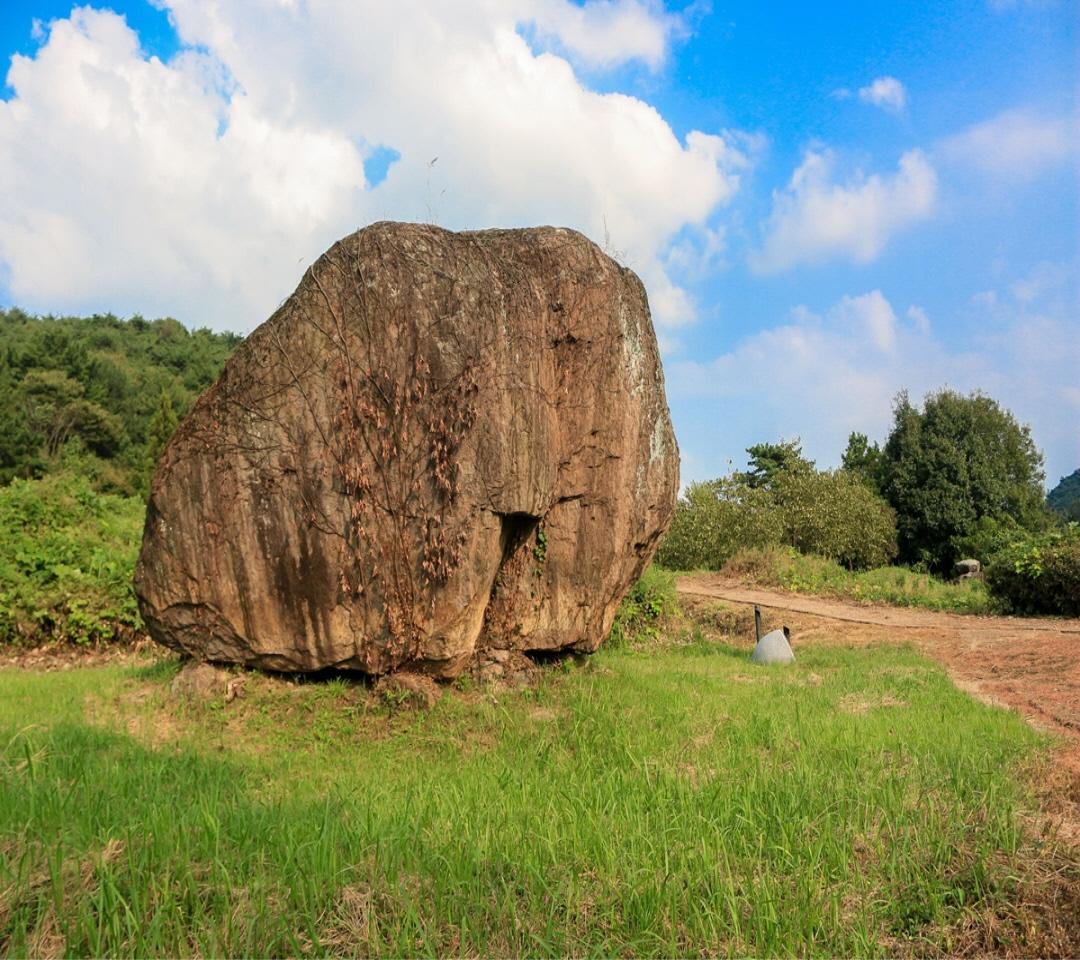
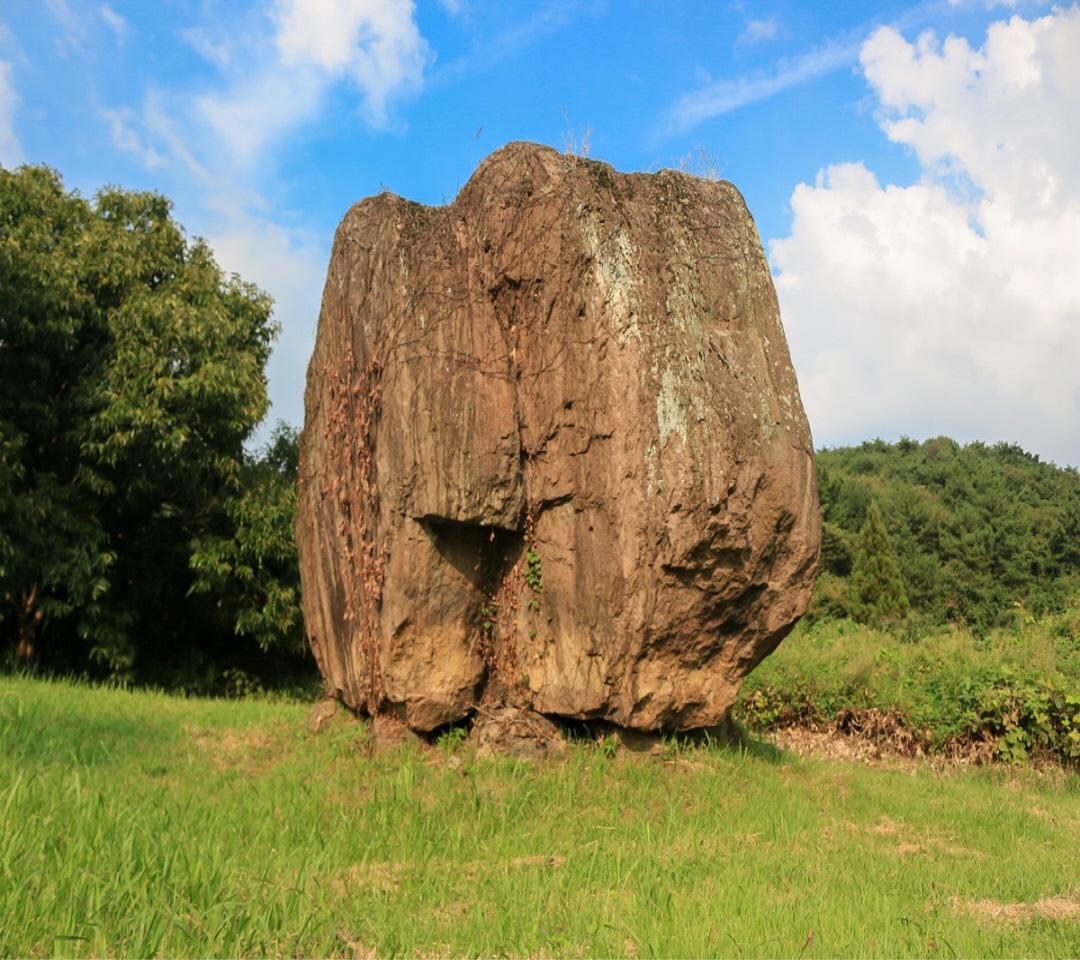
"The Goebawi Dolmen is the first dolmen found at the entrance of Hyosan-ri, Dogok-myeon. It is located on high ground, and the size of its capstone is huge."
[Tourist]
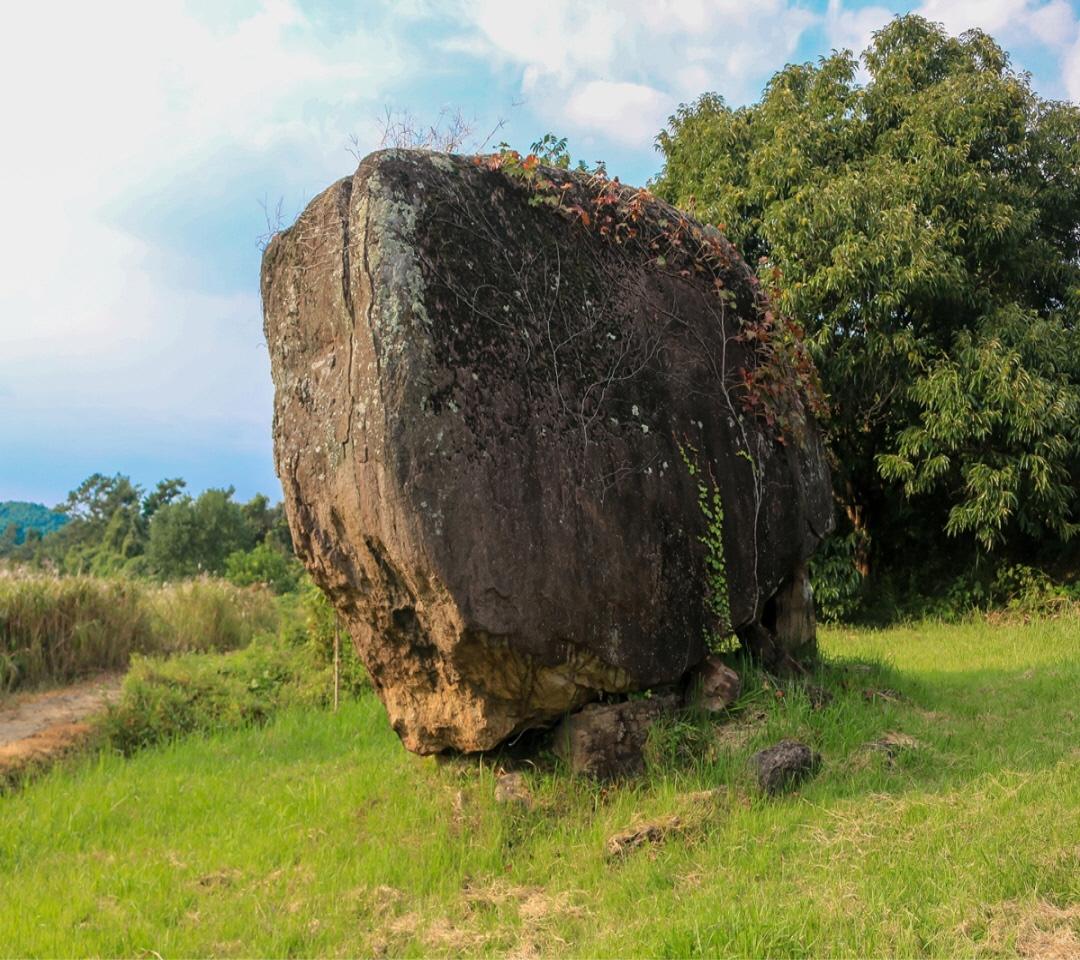
"It's very big. But its supporting stones are relatively small.
[Cultural Commentator]
"It's a typical go-board dolmen with supporting stones shoring up a huge capstone. The Goebawi Dolmen is larger than the surrounding dolmens, and stands tall alone, overlooking the flatland from a high ground. The Goebawi Dolmen has no burial chamber, and the pieces of plain pottery were found from its surrounding area during an excavation. Due to these reasons, we can infer that it was used as an altar."
[Tourist]
"Sir, isn't the dolmen a tomb? That's what I learned at school.“
[Cultural Commentator]
"The dolmens were mainly used as tombs, but some were used as altars and headstones."
[Tourist]
"Headstones?"
[Cultural Commentator]
"The headstone here refers to the stone that marks the area of the tomb."
[Tourist]
"What is plain pottery?"
[Cultural Commentator]
"Plain pottery refers to the earthenware used during the Bronze Age, during which the dolmens were built, and it is called plain pottery due to its lack of distinctive patterns. This flat earthenware is made of clay mixed with coarse sand or agalmatolite powder, and it is then baked in a kiln. It is usually reddish or yellowish brown."
[Tourist]
"There are other dolmens too near the Goebawi Dolmen. What kind of dolmens are they?”
[Cultural Commentator]
"There are go-board dolmens, also known as foundation dolmens, and pad-stone dolmens nearby the Goebawi Dolmen. The pad-stone dolmens have a capstone placed right above the burial chamber built underground. They are also referred to as no-support, lid, or footstone dolmens. In these pad-stone dolmens, a stone burial chamber is almost always found, indicating that they were originally intended to serve as tombs.”
[Woman]
The Goebawi Rock, which resembles a mouse, has a story embracing feng shui related to the surrounding area.
[Friend 1]
"Look, that Goebawi Rock is the cat rock.”
[Friend 2]
"Why is the cat rock standing here?”
[Friend 1]
"The mountain behind Seonggok Village, 100 m south of Goebawi Rock, which is also the ancestral mountain of the Pungsan Hong clan, is said to resemble a mouse according to feng shui. To put it bluntly, it's like a mouse grave."
[Friend 2]
"A mouse and a cat are incompatible with each other, aren't they? A mouse always gets attacked by cats.”
[Friend 1]
"But fortunately, the water flowing in front of the rock prevents the cat from pouncing on the mouse. That's why the village is peaceful and the ancestral mountain of Pungsan Hong clan is known to be a propitious site."
10, Segye-ro, Wonju-si, Gangwon-do (PC) 26464
TEL : +82-33-738-3852
Copyright© Korea Tourism Organization. All Rights Reserved.