


Types of dolmens
[Man]
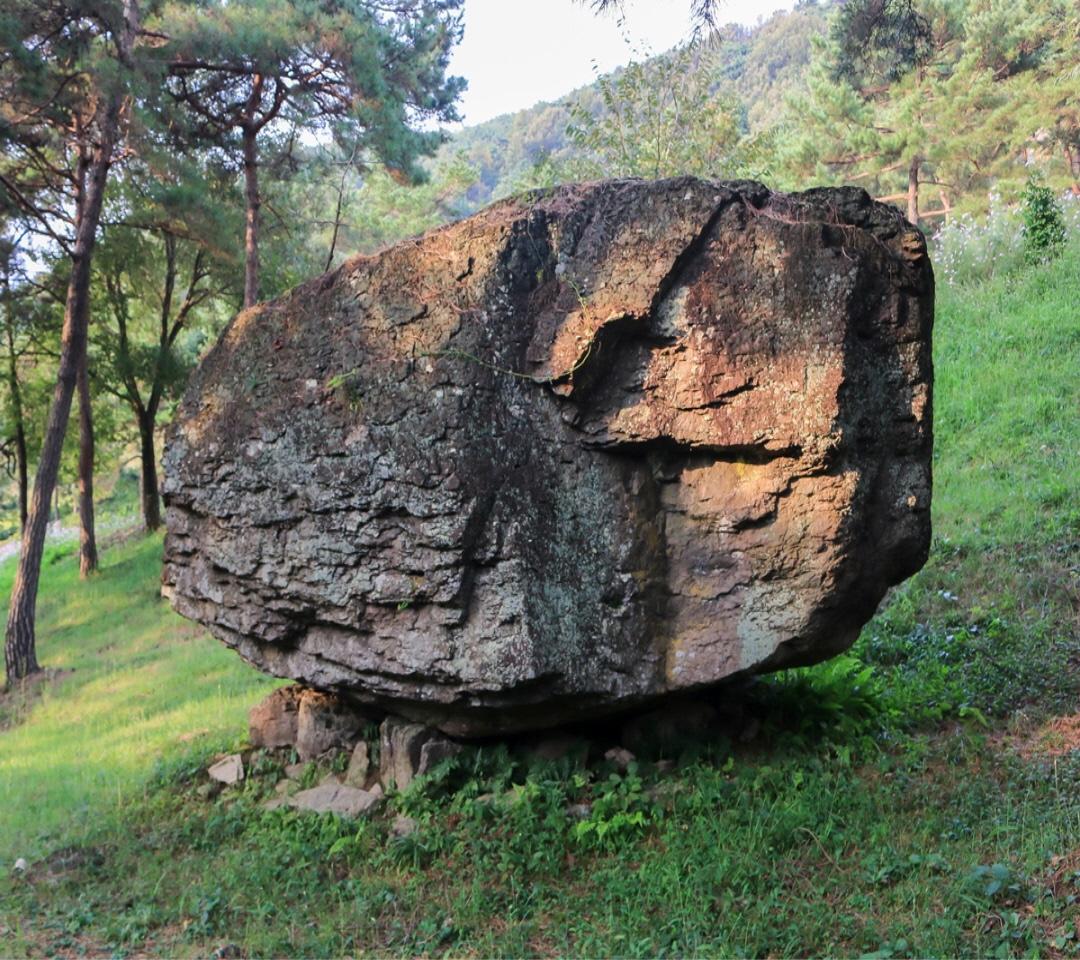
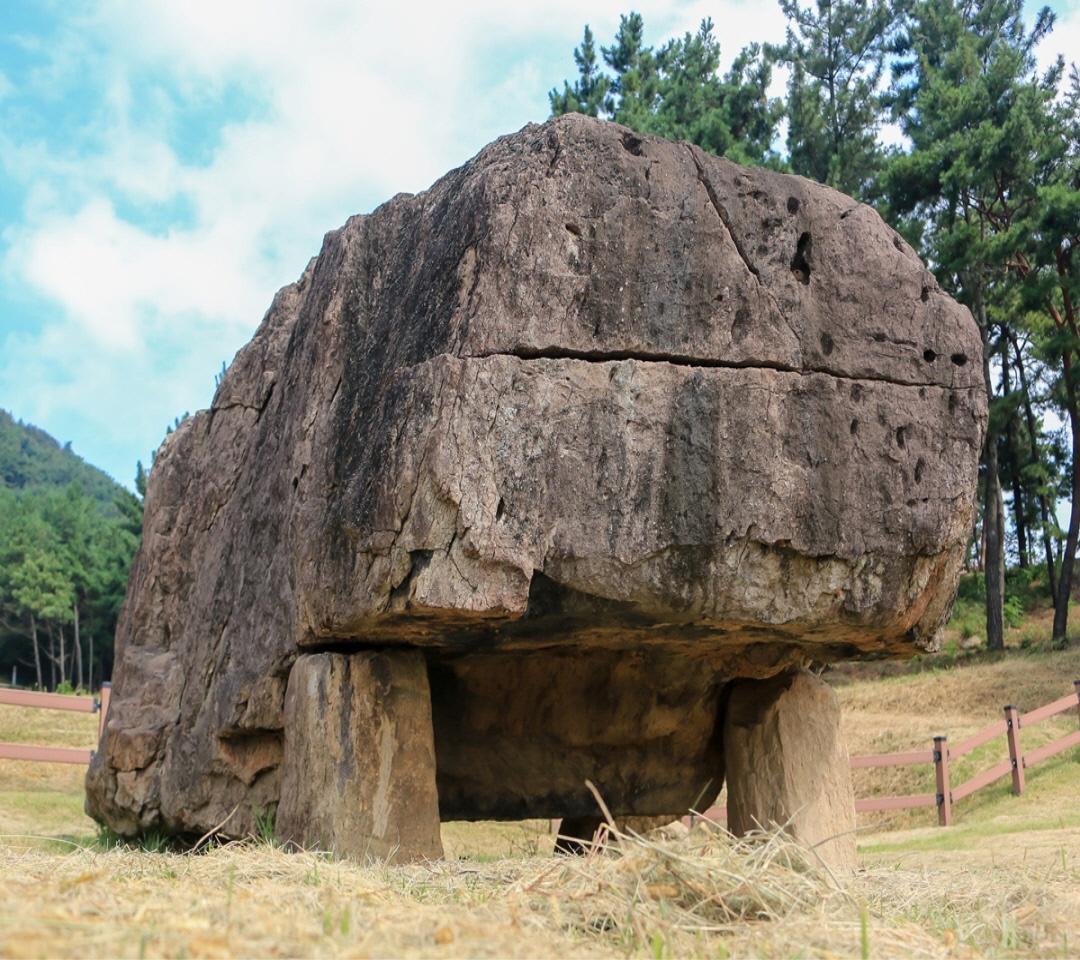
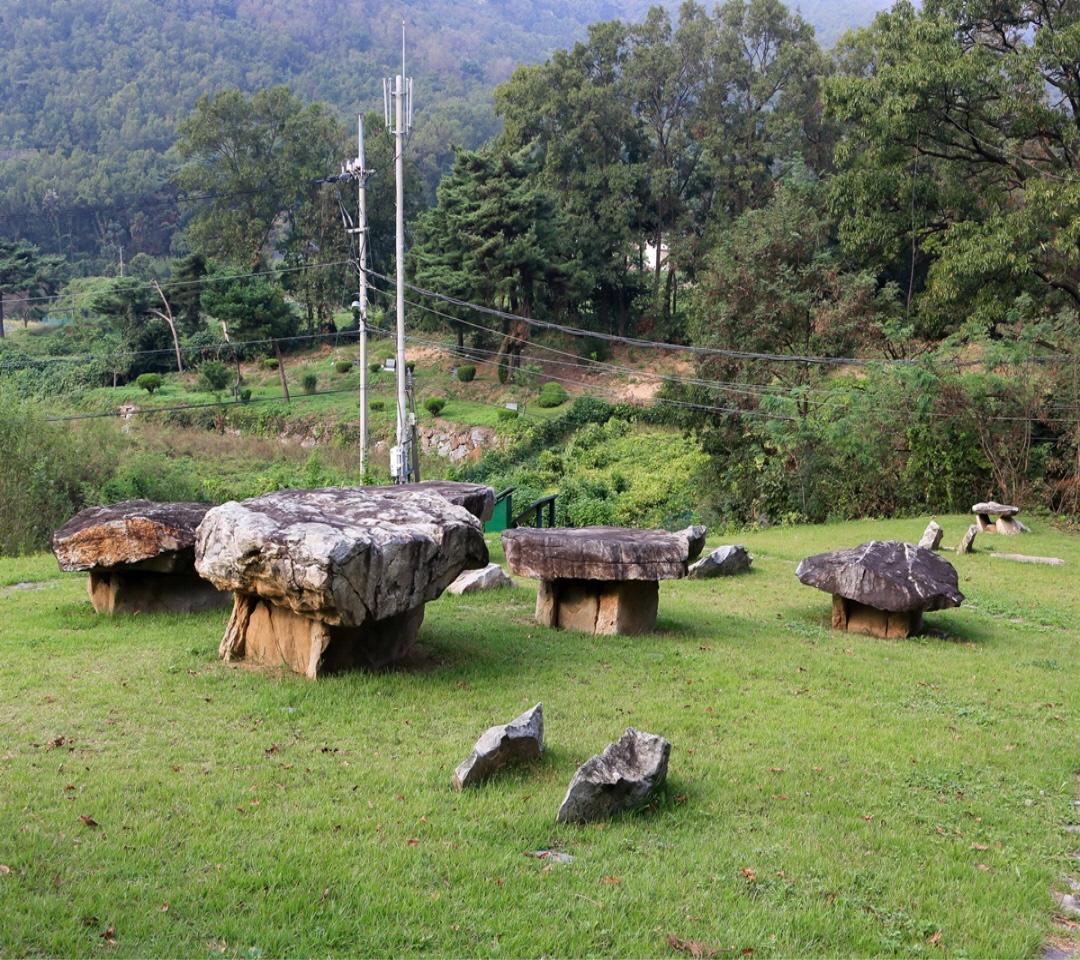
Dolmens are different from ordinary tombs because they are made with huge rocks erected above the ground. Their simple structure allows detailed insight. The dolmens are classified into table dolmens, go-board dolmens, pad-stone dolmens, semi-exposed dolmens, and exposed dolmens.
[Woman]
The table dolmens have a burial chamber made with 4 or 6 wide flagstones that are exposed above the ground, with a flat capstone placed on top of the burial chamber. They are called table dolmens because they resemble a table. They are mainly located in the northern part of the Korean Peninsula and the Liaoning area of China, and thus they used to be called the northern style. Among the table dolmens, the large ones are estimated to have been built mainly as altars or monuments. Among these dolmens, the super-large dolmens, which are more than 8 meters long, 5 meters wide, and 2 meters high, are usually found in the Liaodong Peninsula and the Daedonggang River basin in Korea, and only one is built on each hillside or mountainside.
[Man]
Go-board dolmens have a burial chamber built underground made of flagstones or broken and natural stones, and 4 to 8 supporting stones are erected around them with a large capstone placed on top. This is called a go-board dolmen because it resembles a go board. The go-board dolmens, which look magnificent as they are raised above the surface, are often devoid of distinct burial chambers. A large dolmen usually exists at the foot of a mountain, hill, or flat area at the end of a valley, but in a cluster of dolmens, it is located at the center or in an independent location.
[Woman]
The pad-stone dolmens have a burial chamber with a lid right above the top. Since there are no propping stones, the pad-stone dolmens are alternatively referred to as no-support, lid, or footstone dolmens. For this type, a stone burial chamber is almost always found, indicating that they were originally intended to serve as tombs. Being widely distributed in the Liaoning Peninsula, the Korean Peninsula, and Kyushu, Japan, they are the most common type of tombs among the dolmen types. The capstone is thin in the north, but in the south it tends to be thicker. Most of the artifacts excavated from dolmens were also found in this type.
[Man]
Semi-exposed dolmens have a structure like a stone coffin on the ground with a flagstone that is lower than the typical table-style flagstone or that has multiple overlapping flagstones. On the outer covering, the remaining styles are those with propping stones erected to match the height of the flagstone; with only the flagstone part without any propping stones; and with all propping stones missing. The burial chamber is also located either on the ground and in the semi-basement, and it is difficult to spot the location of the burial chamber without checking each and every part.
[Woman]
The exposed dolmens are also called Jeju-style dolmens. The burial chamber is exposed to the ground, and multiple flagstones are erected along the edge of the capstone. The number of flagstones exposed to the ground amounts to six or more, forming a burial chamber similar to the flat shape of the capstone, while the burial chamber is usually shaped like an oval or square. The exposed dolmen is a unique type of dolmen only found on Jeju Island in Korea. Similar burial chamber structures have also been found in Zhejiang Province, China.
10, Segye-ro, Wonju-si, Gangwon-do (PC) 26464
TEL : +82-33-738-3852
Copyright© Korea Tourism Organization. All Rights Reserved.