


Daesan-ri Dolmen in Ganghwa
[Man]
The dolmens located in Korea include table dolmens, also known as northern-style dolmens, go-board dolmens, also referred to as southern-style dolmens, pad-stone dolmens with no supporting stones, and the exposed dolmens found in Jeju Island.
[Woman]
The table dolmens have a burial chamber made with 4 or 6 wide flagstones that are exposed above the ground, with a flat capstone placed on top of the burial chamber. They are called table dolmens because they resemble a table.
[Man]
Go-board dolmens are built with a burial chamber underground, and four to eight propping stones or so-called supporting stones are placed on top of it. They are called go-board dolmens because they look like a go board due to the shape where a large capstone is placed on top of these supporting stones. The go-board dolmens, which look magnificent as they are raised above the surface, are often devoid of distinct burial chambers.
[Woman]
The pad-stone dolmens have a burial chamber with a lid right above the top. The pad-stone dolmens that cover their burial chambers without any supporting stones are alternatively referred to as no-support, lid, or footstone dolmens. It is estimated that the pad-stone dolmens were originally built as tombs, as their stone burial chambers are almost always found. Being widely distributed in the Liaoning Peninsula, the Korean Peninsula, and Kyushu, Japan, they are the most common type of tombs among the dolmen types.
[Man]
As for the exposed dolmens, which are also known as Jeju-style dolmens, their burial chambers are exposed to the ground, and multiple flagstones are erected along the edge of the capstone. The number of flagstones exposed to the ground amounts to six or more, forming a burial chamber similar to the flat shape of the capstone, while the burial chamber is usually shaped like an oval or square. Among the dolmens in Korea, the exposed dolmens are only found on Jeju Island.
[Woman]
The Daesan-ri dolmen in Ganghwa is located at the last foot of the northern ridge of Buksan Mountain, the eastern peak of Goryeosan Mountain. It is on a ridge 20 meters above sea level.
[Friend 1]
“Hey, look over here.”
[Friend 2]
"Why? “Huh? Is this a dolmen?”
[Friend 1]
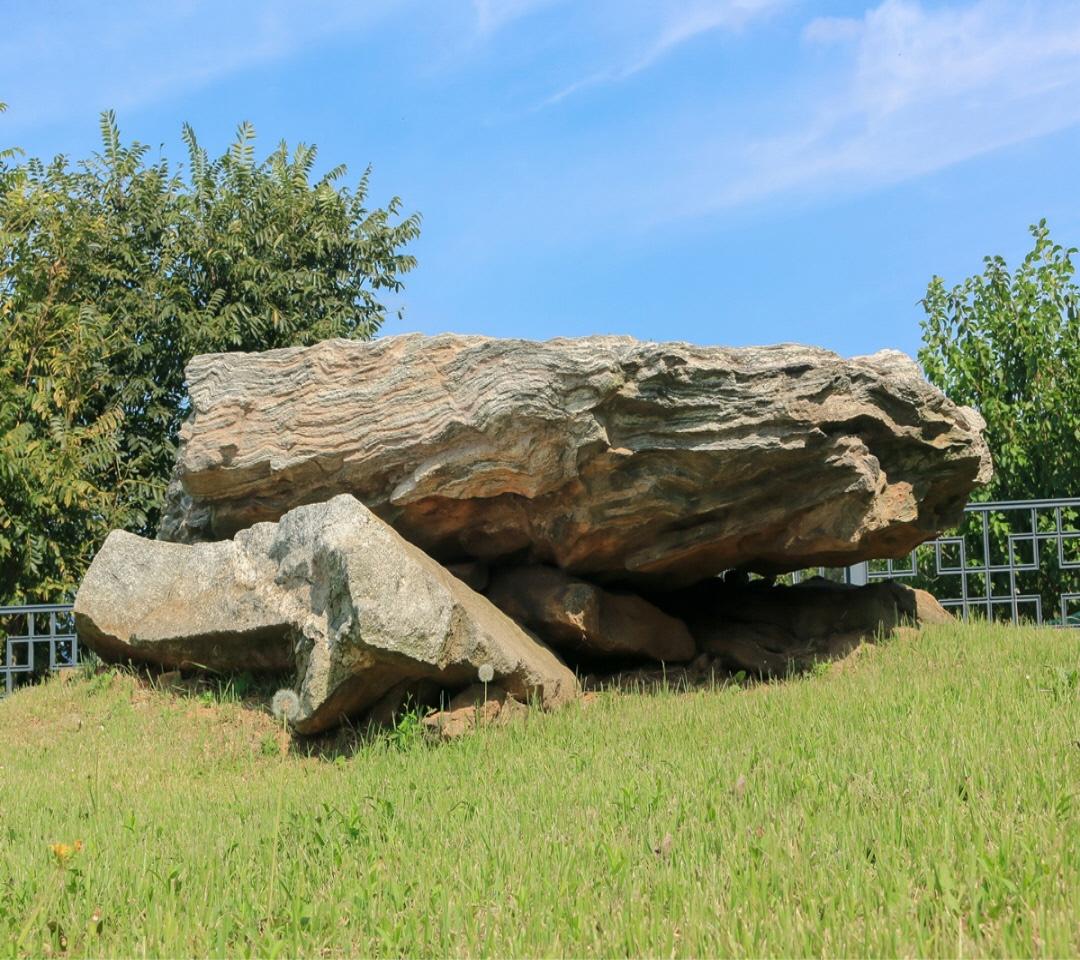
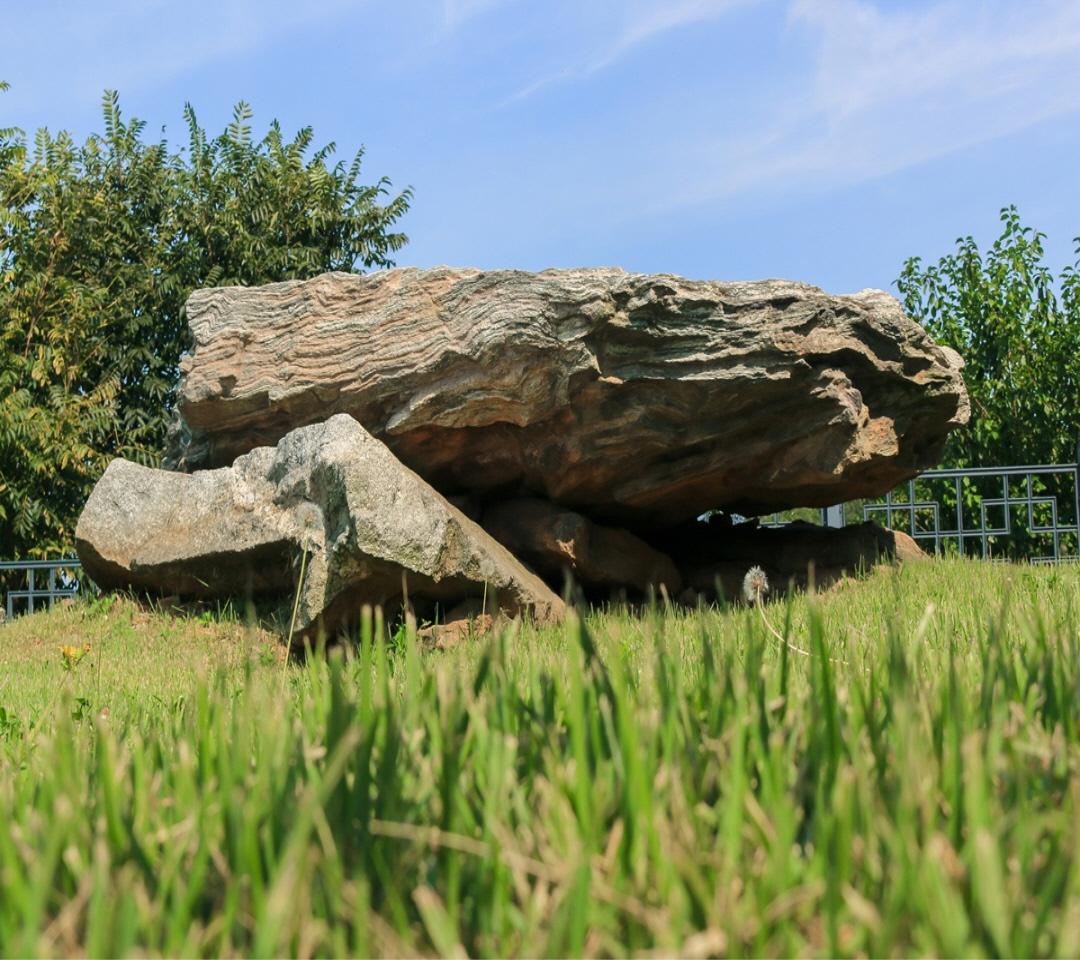
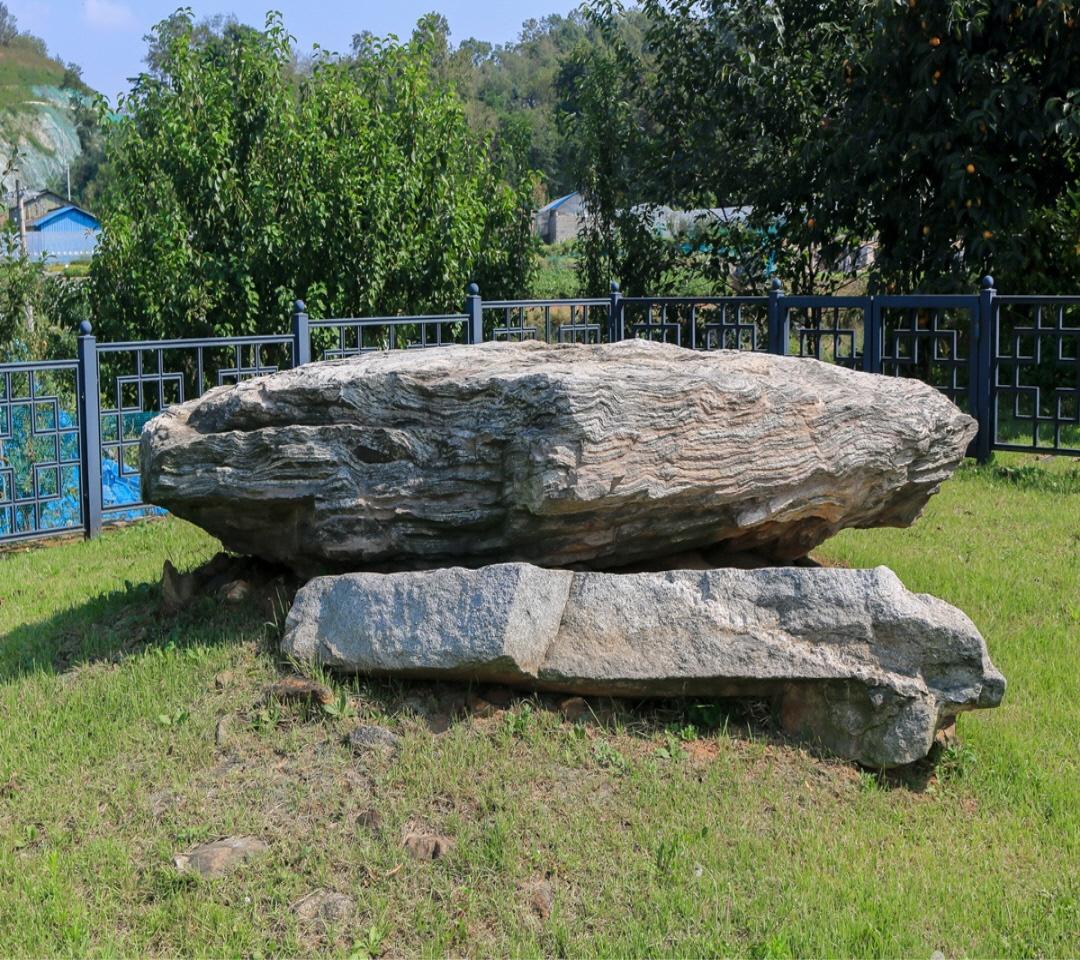
"Yes, the dolmen collapsed and the capstone fell down.”
[Friend 2]
"So dolmens collapse, too!”
[Friend 1]
"A table dolmen could topple down. By the way, it would be unfortunate for the tomb's owner. "It would mean the collapse of your own tomb.”
[Friend 2]
"A tomb?"
[Friend 1]
"The dolmens are known to represent the tombs of the Bronze Age. Of course there are also others dolmens used as headstones or altars.”
[Friend 2]
“The Bronze Age? Are they that old? I didn’t know dolmens were so old.”
[Friend 1]
“Yes, they sure are. What a pity. It would have been great if it had kept its original form.
[Friend 2]
“At least some part of it has been preserved.”
[Woman]
The Daesan-ri dolmen in Ganghwa has collapsed with its capstone fallen to the ground. The dolmen is 2.4 m long, 1.5 m wide, and 0.45 m high on its right, and 1.6 m long, 1.3 m wide, and 0.3 m high on its left side. The capstone is 3.68 m long, 2.6 m wide, and 0.5 m thick. The table-shaped stone of the Daesan-ri dolmen in Ganghwa collapsed, giving it its current shape.
Daesan-ri Dolmen in Ganghwa
@Registered by : KOREA TOURISM ORGANIZATION