


Dolmen Cluster in Araenmal, Hado-ri, Ganghwa
[Man]
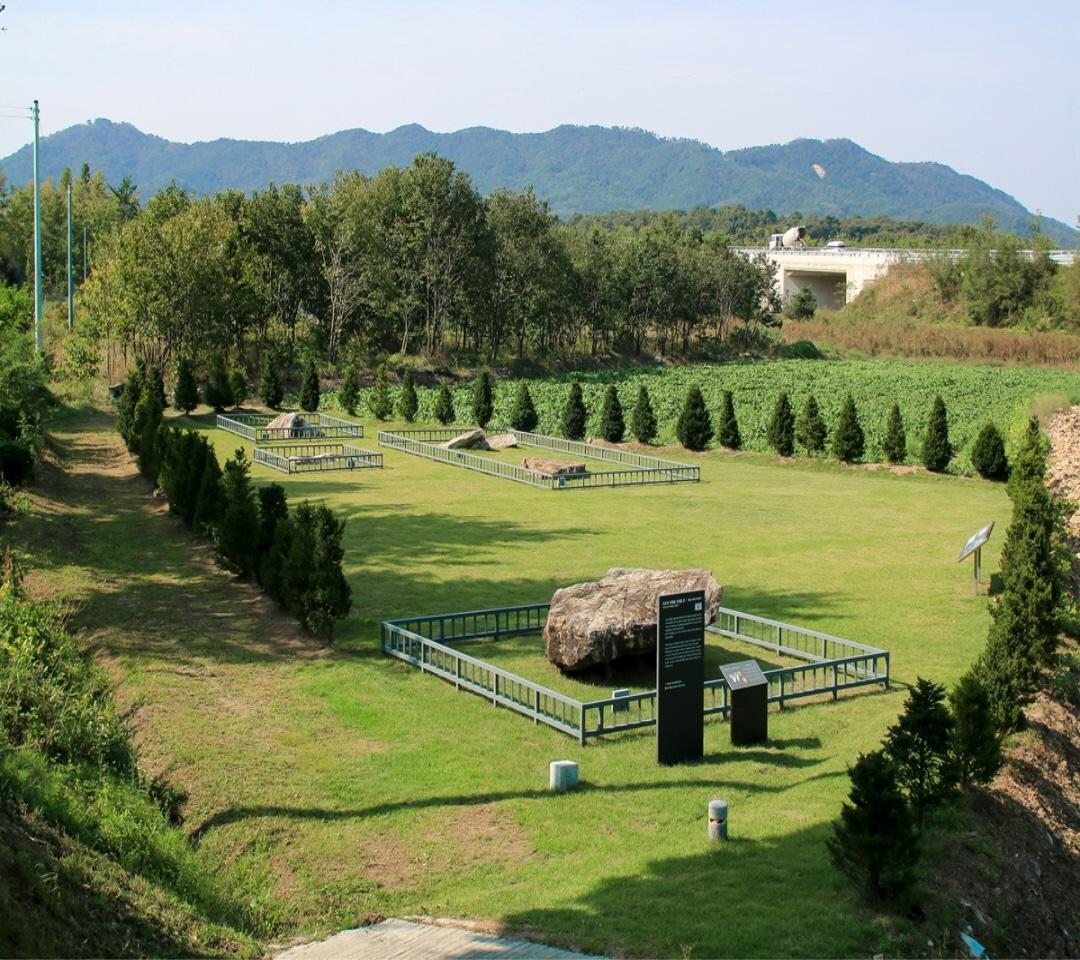
The dolmen cluster in Araenmal, Hado-ri, Ganghwa is about 400 meters away from the dolmen cluster in Bugeun-ri to the northwest, with a plain in between. Unlike most dolmens of Ganghwado Island, it is located on a flat surface. In 1916, a Japanese person named Imanishi Ryu conducted an investigation on these five dolmens during the Japanese occupation.
[Woman]
When Imanishi Ryu studied the dolmens, the records show that two horizontal propping stones or so-called supporting stones and the finishing stone in the northwest remained well-preserved, but now only the supporting stone on the north side is propping the capstone while the other stones are missing, thus losing their original form.
[Man]
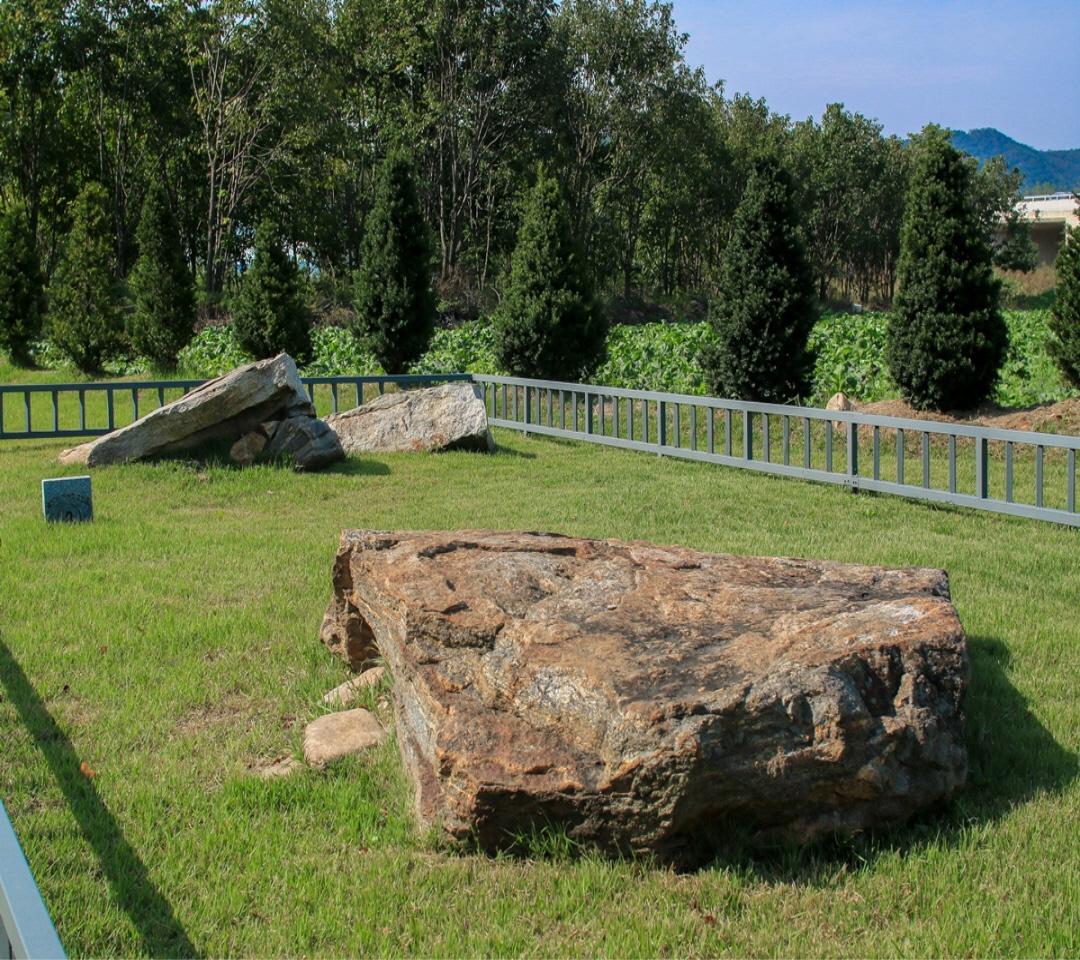
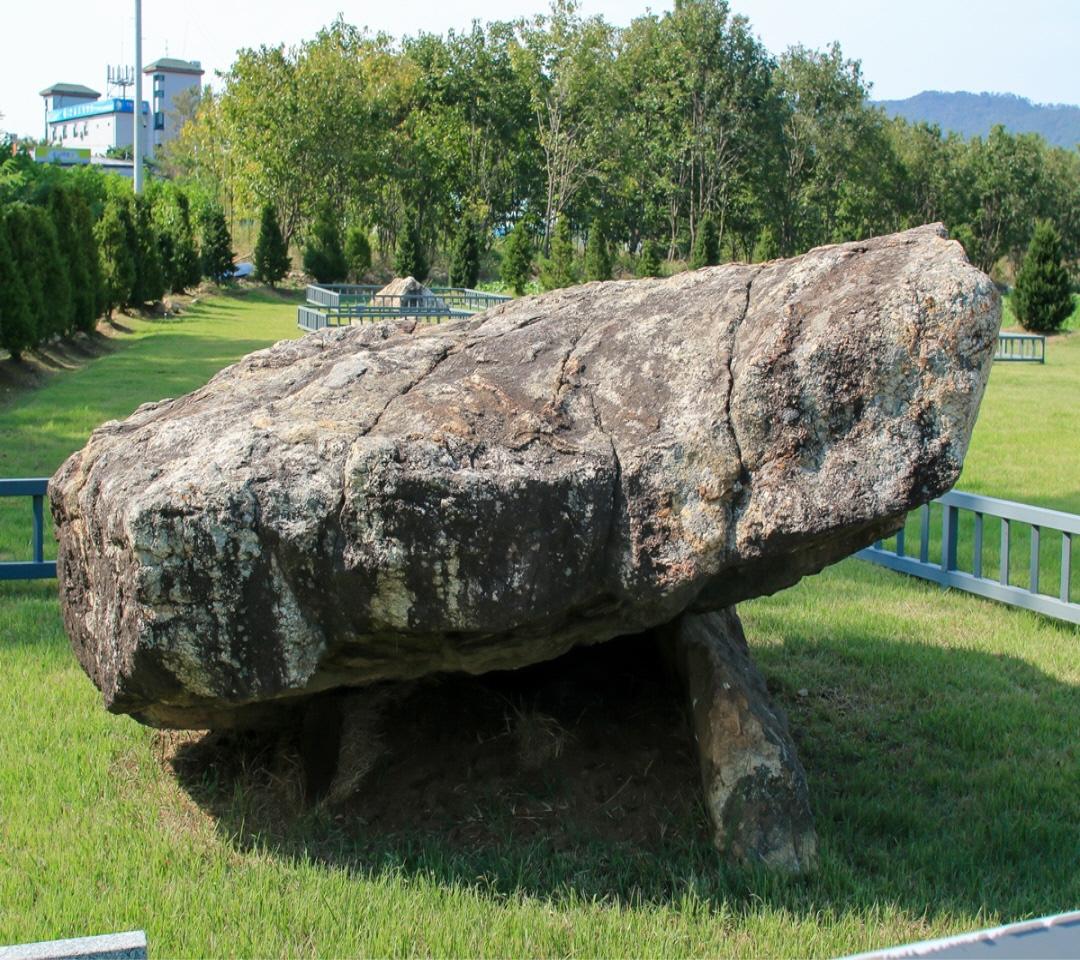
According to the composition of the dolmens in Araenmal of Hado-ri, Ganghwa, there are 1 table and 4 pad-stone dolmens. The table dolmens have a burial chamber made of 4 or 6 wide flagstones that are exposed above the ground, with a flat capstone placed on top of the burial chamber. They are called table dolmens because they resemble a table.
[Woman]
The pad-stone dolmens have a capstone placed right above the burial chamber built underground. The pad-stone dolmens that cover their burial chambers without any supporting stones are alternatively referred to as no-support, lid, or footstone dolmens. In this style, a burial chamber made of stone is almost always found, and thus they are known to have been built as tombs. The capstone is thin in the north, but in the south it tends to be thicker.
[Man]
Among the dolmens in Hado-ri, Ganghwa, the table dolmen has a propping stone or a supporting stone on its north side with a length of 2.15 m, thickness of 0.28 m, and height of 0.7 m. As the supporting stone on its south side is buried underneath the capstone, its exact length is unknown. The size of the capstone is 2.62 m long and 1.95 m wide, and its maximum thickness is 0.65 m.
[Woman]
The dolmens in Hado-ri, Ganghwa were once located in the middle of privately owned farmland. Ganghwa-gun then purchased the land where dolmens are located, and has managed them since.
10, Segye-ro, Wonju-si, Gangwon-do (PC) 26464
TEL : +82-33-738-3852
Copyright© Korea Tourism Organization. All Rights Reserved.