


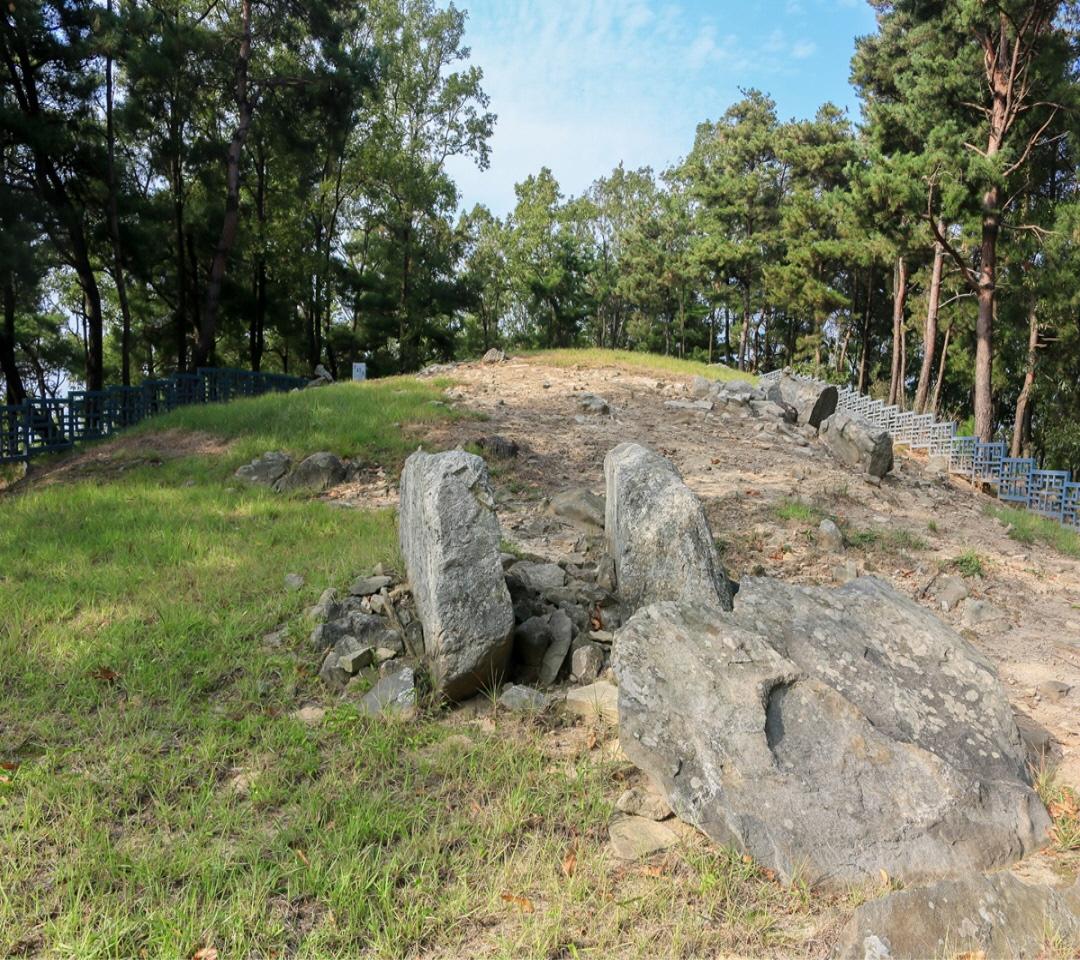
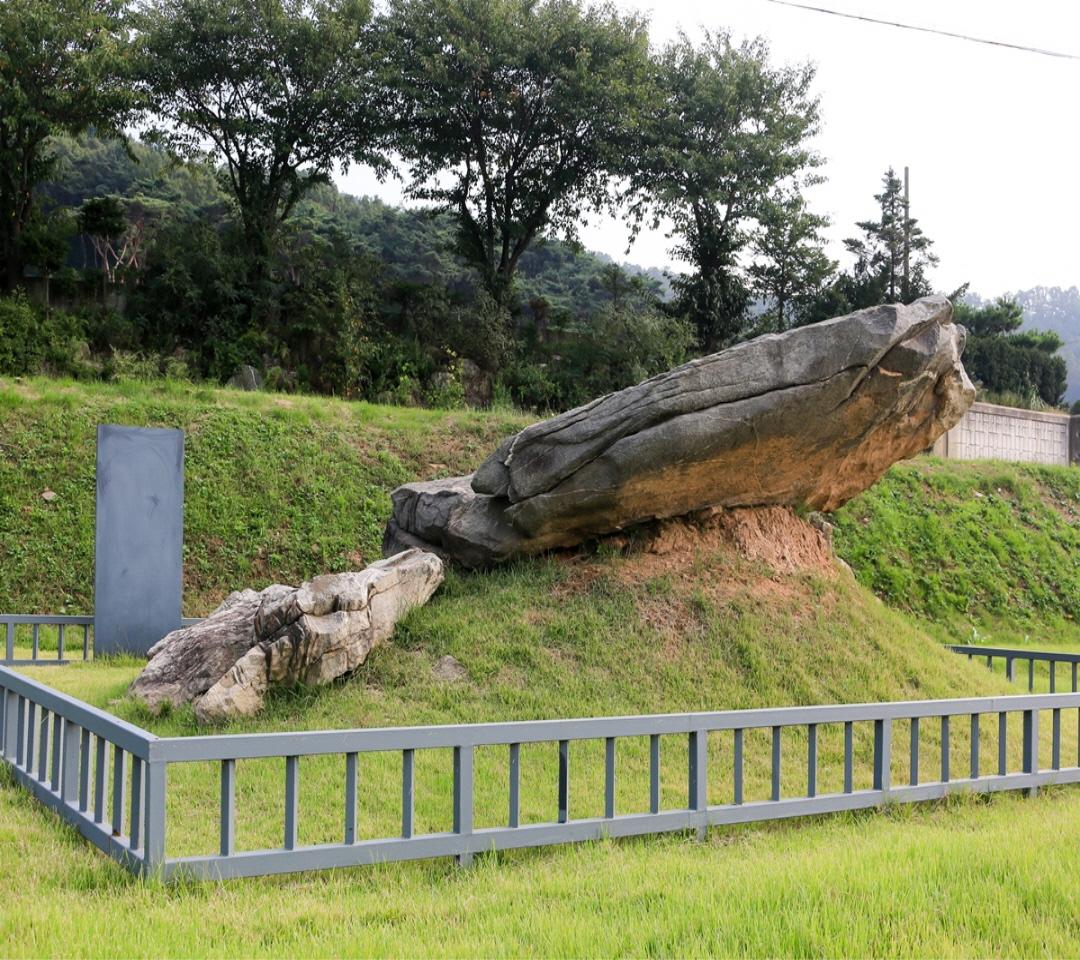
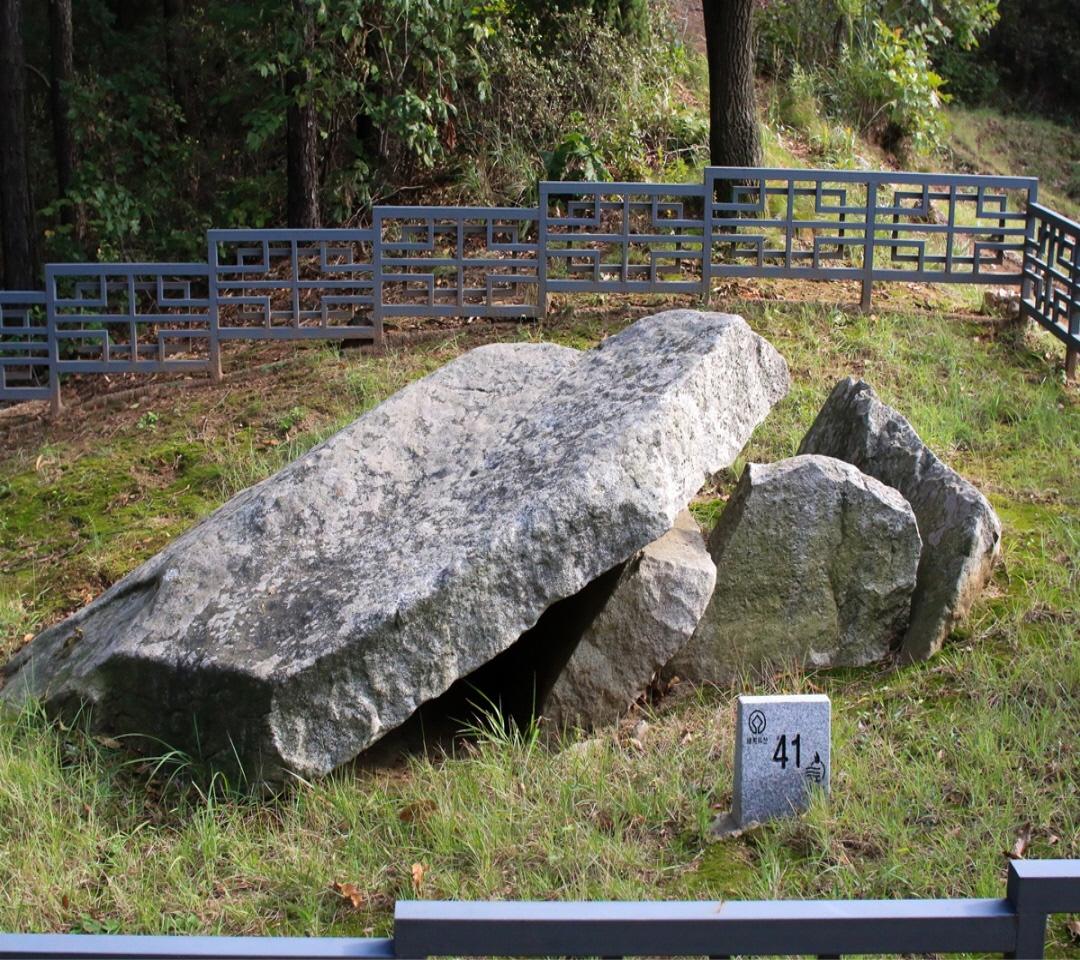
Dolmen Cluster in Samgeo-ri, Ganghwa
[Friend 1]
“Wow, I love the fresh air.”
[Friend 2]
“It's nice, isn't it?”
[Friend 1]
“Yes. By the way, why is there a rock here?”
[Friend 2]
“Oh, that is a dolmen!”
[Friend 1]
“A dolmen?”
[Friend 2]
"You know that dolmens represent the tombs of the Bronze Age, right? The tombs are located here on the western ridge of Goryeosan Mountain in Ganghwa.”
[Friend 1]
"The tombs? There is more than one tomb?"
[Friend 2]
"Sometimes dolmens form groups of 10 to 20. The Dolmen Cluster in Samgeo-ri, Ganghwa is also built in groups. There are five dolmen clusters on Ganghwa Island that are built in groups as they are here."
[Friend 1]
"I see."
[Friend 2]
"There are nine table dolmens located here in total. However, the ones here are not that large, and they do not maintain their original shape, either.
[Man]
The table dolmens have a burial chamber made with 4 or 6 wide flagstones that are exposed above the ground, with a flat capstone placed on top of the burial chamber. They are called table dolmens because the their exterior appearance resembles a table, but they were once called northern-style dolmens as they were mainly found in the region north of the Han River and the Liaoning area of China. Among the table dolmens, large ones were primarily built as altars or monuments.
[Woman]
Among these dolmens, the super-large dolmens, which are more than 8 meters long, 5 meters wide, and 2 meters high, are only found in the Liaodong Peninsula and the Daedonggang River basin in Korea, and only one is built on each hillside or mountainside. On the other hand, the table dolmens in the south usually have a capstone that is 3-4 m tall, and the height of their burial chambers is less than 1 m, making the dolmen smaller and the burial chamber narrow.
[Man]
Among the dolmens in Samgeo-ri, Ganghwa, there is one with a small hole on its capstone called Seonghyeol, which is sometimes associated with constellations. Although dolmens are known to be the tombs of the ruling class with political power, they also served as altars or headstones symbolizing graveyards. The dolmens in Samgeo-ri, Ganghwa were registered as a UNESCO World Heritage Site along with the dolmen sites in Gochang and Hwasun on December 2, 2000.
10, Segye-ro, Wonju-si, Gangwon-do (PC) 26464
TEL : +82-33-738-3852
Copyright© Korea Tourism Organization. All Rights Reserved.