


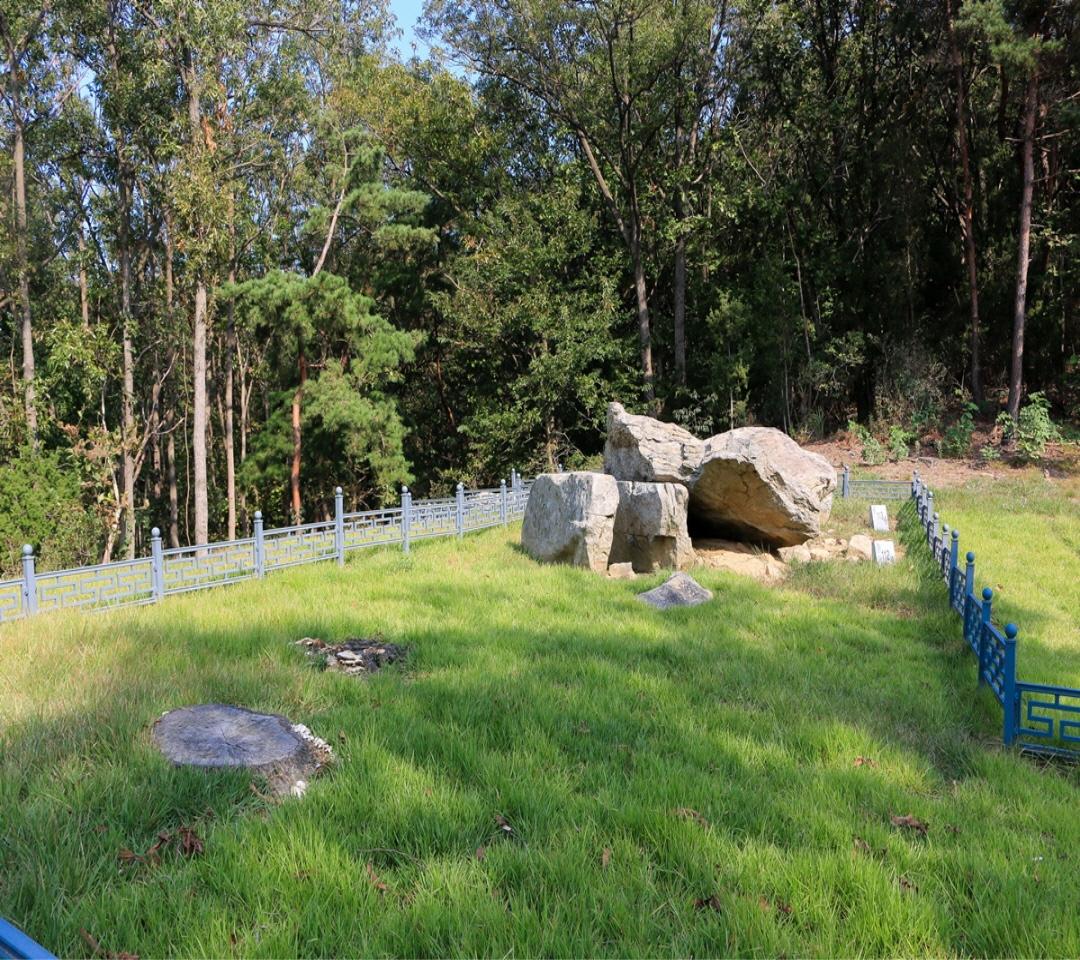
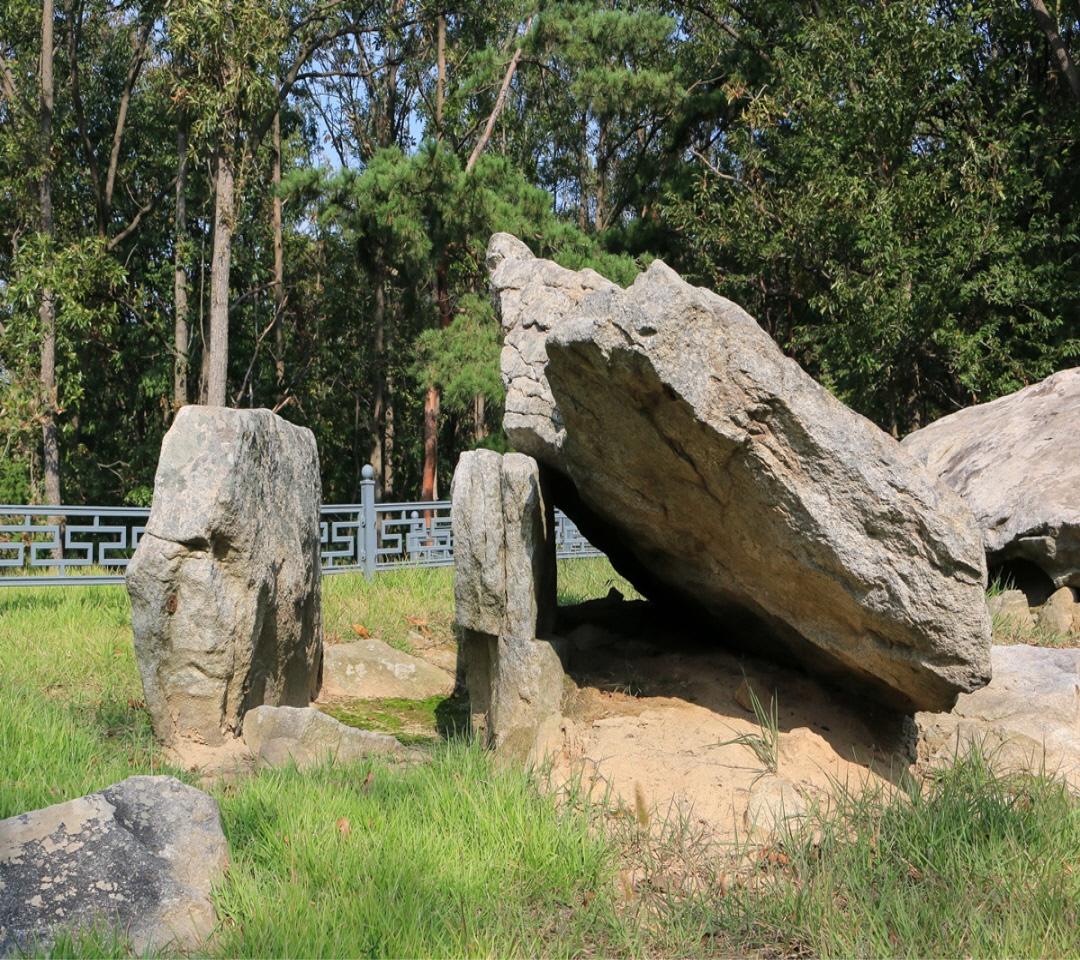
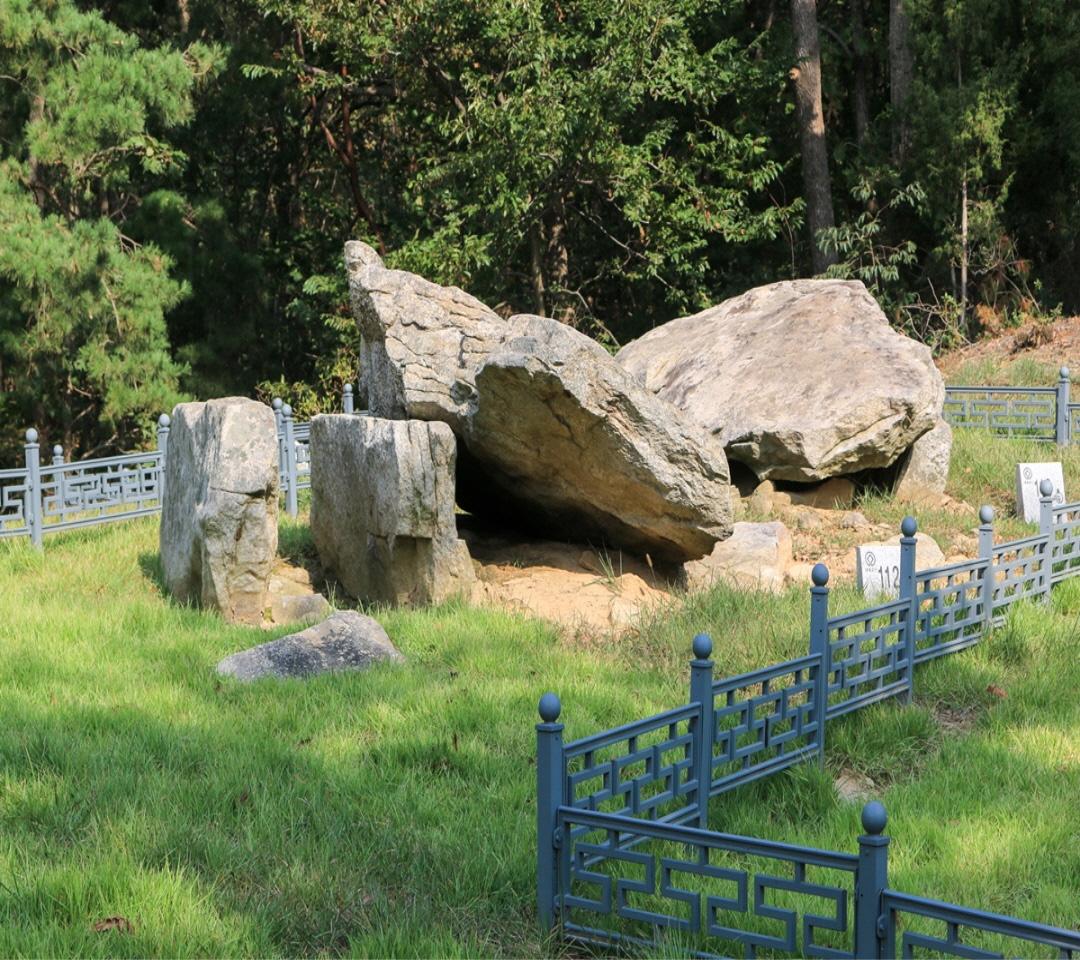
Dolmen cluster in Gyosan-ri, Ganghwa
[Man]
Ganghwa dolmens are located in Bugeun-ri, Samgeo-ri, Gocheon-ri, Osang-ri, and Gyosan-ri of Hajeom-myeon in Ganghwa-gun, Incheon. The dolmens are mainly located at the northern foot of Goryeosan mountain, with 127 dolmens dispersed. Since Ganghwa, an island at the mouth of the Han River, has been an important area historically, the dolmens there have also been widely known from early on.
[Teacher]
"In Europe, megalithic monuments began to be built during the Neolithic Age, and in other regions such as Asia, dolmens were built during the Bronze Age and the Iron Age. The shape of dolmens varies from region to region, but the table shape is commonly found around the world."
[Student]
"Sir, are all dolmens table-shaped,then?"
[Teacher]
"No, they are not. In addition to the table dolmens, there are also go-board dolmens with supporting stones placed under a huge capstone. There are also pad-stone dolmens that used a huge capstone like a lid covering the burial chamber underground, and exposed dolmens built with supporting stones surrounding them. Among those, go-board dolmens are the ones mostly found in Korea."
[Man]
The dolmen cluster in Gyosan-ri, Ganghwa-gun, which is located in Gyosan-ri of Yangsa-myeon in Ganghwa-gun, Incheon, was designated as Natural Monument No. 48 of Incheon Metropolitan City. There are 11 dolmens on the northern hill of Byeollipsan Mountain. The dolmens here are generally well-preserved, with only parts of the supporting stones and capstones showing damage.
[Woman]
In the dolmen cluster in Gyosan-ri, Ganghwa-do, there are table dolmens with supporting stones, finishing stones, and capstones, while some of the dolmens are go-board dolmens with a capstone measuring 3-4 m. Their original shapes are well-preserved because they are located on a desolate hill, resulting in little damage caused by humans.
[Man]
The table dolmens have a burial chamber made of 4 or 6 wide flagstones that are exposed above the ground, with a flat capstone placed on top of the burial chamber. They are called table dolmens due to their resemblance to a table. They were once called northern-style dolmens because they were mainly found north of the Han River and in the Liaoning province of China."
[Woman]
Go-board dolmens have a burial chamber built underground made of flag stones or broken and natural stones and 4 to 8 supporting stones erected around them with a large capstone placed on top, and they are called go-board dolmens because of their resemblance to a go board. A large dolmen is usually found at the foot of a mountain, hill, or flat area at the end of a valley, but in a cluster of dolmens it is located at the center or in an independent location. These dolmens usually have round, egg-shaped capstones that are 3-6 m in length to 2-4 m in thickness, or rectangular-shaped capstones with each side leveled.
10, Segye-ro, Wonju-si, Gangwon-do (PC) 26464
TEL : +82-33-738-3852
Copyright© Korea Tourism Organization. All Rights Reserved.