


Dolmen Cluster in Osang-ri, Ganghwa
[Man]
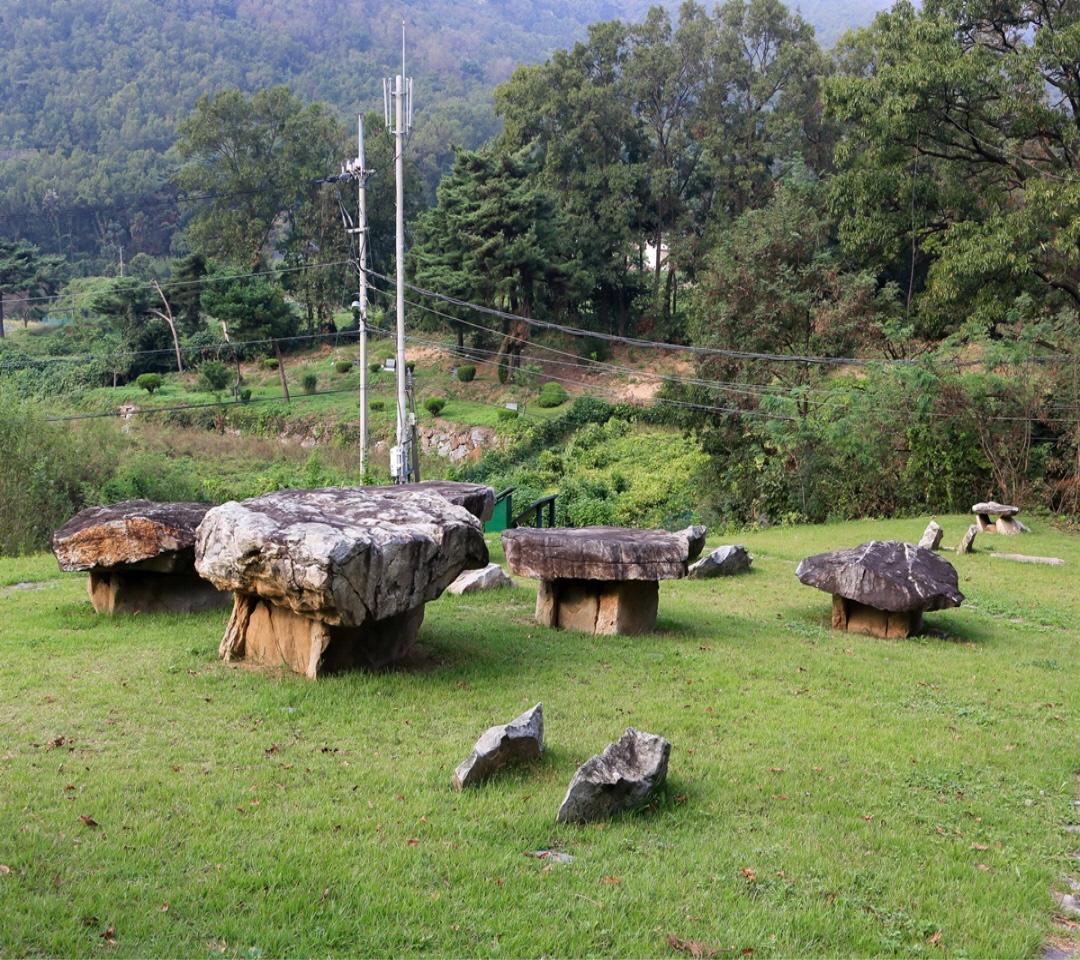
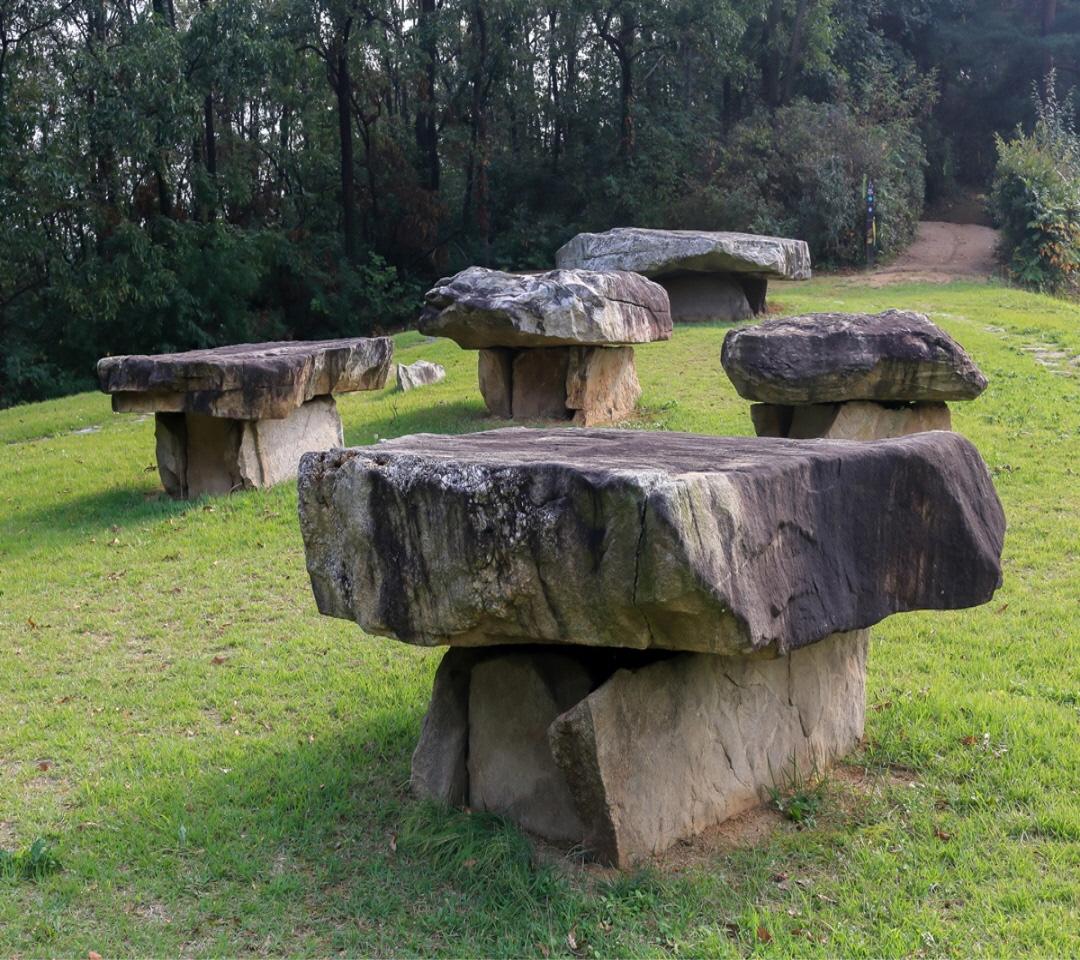
The Dolmen Cluster in Osang-ri, Ganghwa is located at the southern foot of Goryeosan Mountain in Ganghwado Island. Twelve dolmens are gathered on a gently rolling hill at 75 m above sea level. All 12 dolmens are table dolmens, and large, medium, and small sizes are evenly distributed.
[Woman]
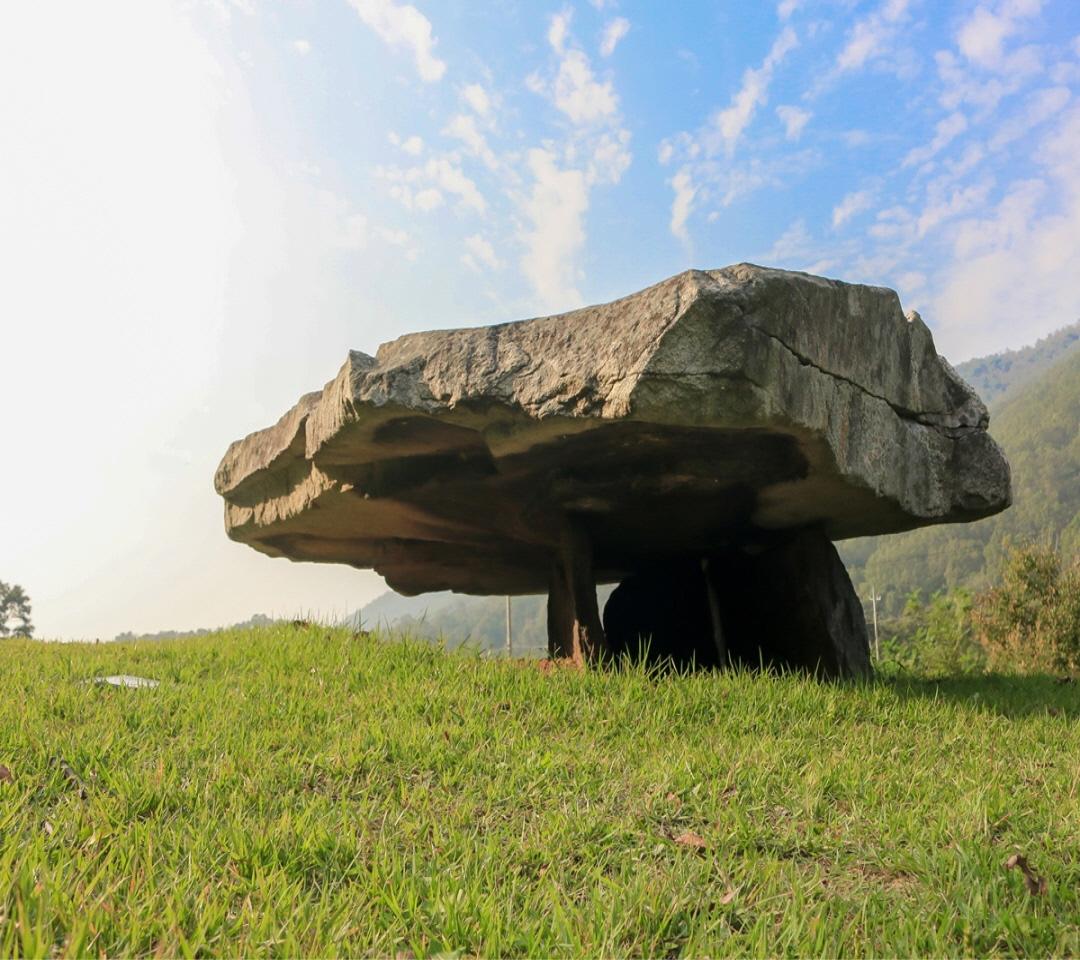
The table dolmens have a burial chamber made of 4 or 6 wide flagstones that are exposed above the ground, with a flat capstone placed on top of the burial chamber. They are called table dolmens because they resemble a table. They were once called northern-style dolmens because they were mainly found north of the Han River and in the Liaoning province of China." However, as these were also found in the southern part of the Korean Peninsula, they were later renamed as table dolmens.
[Man]
The dolmens in Osang-ri, Ganghwa were excavated in 2000.
[Archaeologist 1]
"How's it going? Would you like some coffee?"
[Archaeologist 2]
“Thank you. The excavation is almost finished here, too. Have you made any progress?"
[Archaeologist 1]
"Yesterday, we excavated the old stoneware of the Paleolithic Age, and today we found the pieces of comb-pattern pottery and patternless pottery of the Bronze Age.
[Archaeologist 2]
"That means Ganghwado Island has been inhabited since the Paleolithic Age."
[Archaeologist 1]
"That's right. How about you?”
[Archaeologist 2]
"We found a half moon-shaped stone knife and a stone arrowhead. What we are excavating now is likely to be...”
[Archaeologist 1]
“Likely to be what?”
[Archaeologist 2]
"We still have to dig up a bit more, but it is probably going to be Daerongok (tube-shaped jade beads).”
[Archaeologist 1]
“Hmm, I see. I’ll be getting back to work. Keep up the good work.”
[Archaeologist 2]
"Thanks for the coffee.”
[Woman]
Daerongok is also called Gwanok or Jo-ok, and there are pieces that are less than 1 cm long and some that are more than 10 cm long. Among the beads, it was the first of its kind that emerged, and it was primarily used to make necklaces. It is estimated that Daerongok was first made by cutting hollow bones like bird bones, and in fact, Daerongok made of bird bones have been excavated from Neolithic sites. During the Neolithic Age, Daerongok was also made of either earth or stone.
[Man]
The semicircular stone knife was a stone used for cutting grain ears. Although they are mainly semicircular, square knives were made in the Hamgyeong-do area, while triangular knives were made in the coastal areas of Chungcheong-do and Jeolla-do. At first it was used as a harvesting tool for various grains, but during the mid-Bronze Age, triangular stone knives appeared for rice farming. The semicircular stone knife was used as a ritual object as well as in real life, and it is presumed that the ones found broken around the tomb were not broken during their use, but were rather intentionally broken and buried underground.
[Woman]
Among the dolmens in Osang-ri, Ganghwa, the largest dolmen located at the top was designated as Gyeonggi-do Monument No. 9 on July 3, 1972, and was re-designated as Monument No. 16 by the Incheon Metropolitan Government on March 1, 1995.
10, Segye-ro, Wonju-si, Gangwon-do (PC) 26464
TEL : +82-33-738-3852
Copyright© Korea Tourism Organization. All Rights Reserved.