

Original City Center of Busan - Gukje Market, Jagalchi Market: 4. Bupyeong Kkangtong Market
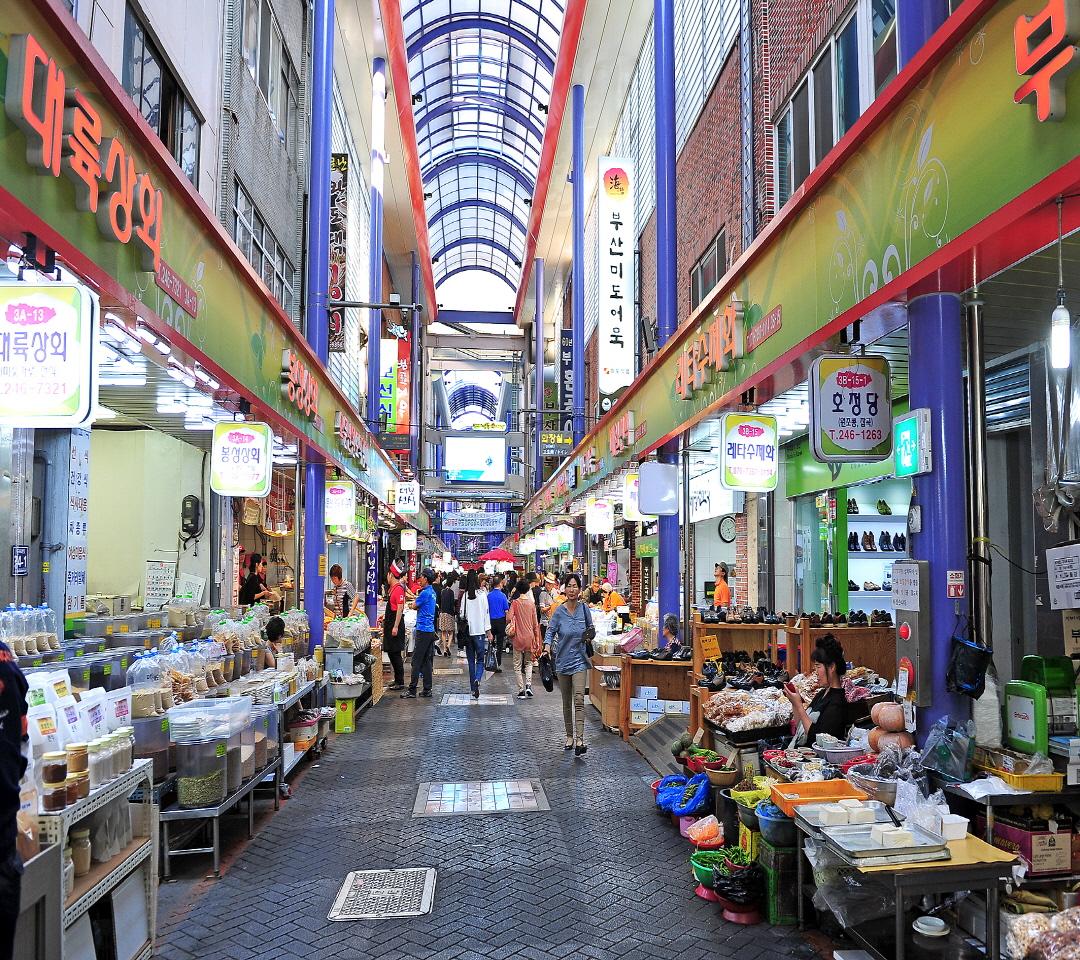
Just across the street from Gukje Market, there exists another enormous market. It is rare to see two such large-sized markets right next to each other even when looking throughout the whole country. While Gukje Market was a market that came about by chance during a period of historic upheaval through Liberation and war, the Bupyeong Market had been a major marketplace in the area since the Joseon Dynasty.
After the port was opened to foreign trades, the Japanese came into this market that had been here since the days of Joseon and began to call it “Ilhan Market”. “Ilhan Market” opened everyday except for the first day of every month, and since during the time, a market that would open five-days a week was the norm, many Joseon people stood in lines to check out the first permanent market they had ever seen in their lives. Thanks to this Bupyeong Market was able to stably and also endured the troubled times of Liberation and the war in a relatively peaceful manner. It was definitely a different vibe from Gukje Market, which was also known as Doddegi Market with its many shabby stands. As the Joseon people took over the stores that had been abandoned by the Japanese, Bupyeong Market was reborn as a market of Joseon. This was also around about the time when “Busan Fish Cakes”, one of the most famous foods of Busan, was created. In 1910s, many stores that cook and sell fish cakes were set up here to respond to the needs of the increasing Japanese population. In one of the official records of the Japanese Government-General of Korea, it even describes how “rice, fish cakes, vegetables and fruits were primarily sold at Ilhan Market”. The fish cake alley in Bupyeong Market was also a natural outcome of merchants who had taken over stores from the Japanese after Liberation, while competitively developing their own recipes.
Bupyeong Market began to enjoy great prosperity when American soldiers replaced the fleeing Japanese. The name, Kkangtong Market, was coined around this time because the main goods sold and purchased then were canned foods that trickled out from the U.S. Army bases in the aftermath of the Korean War. Then, as those who had taken part in the Vietnam War brought and sold C-ration, a type of combat food of the U.S. Army, the name stuck for good. Another name for Bupyeong Market is Dokkaebi Market. Even after the Vietnam War, peddlers obtained foreign goods and sold them to the Bupyeong Kkangtong Market, however, the trading of items that had not gone through customs was not legal at all. So merchants would briefly unpack their bags of goods, and once the police showed up, quickly pack up everything and disappear. The nickname, Dokkaebi, stems from how they repeatedly appeared and disappeared.
During the days when supplies were nowhere near abundant, Bupyeong Kkangtong Market was a new world for the Busan people. There were no “foreign imports” that one could not buy at the market, from the latest electronic devices to liquor and cigarettes, and even cosmetics. The reputation of Bupyeong Kkangtong Market has slightly faded in an era where it is not so difficult to find foreign products or travel overseas, but for tourists, the market still offers a variety of things to see.
Original City Center of Busan - Gukje Market, Jagalchi Market: 4. Bupyeong Kkangtong Market
@Registered by : Busan Tourism Organization