

[Man]
Whales seem to spend an eternity swimming across the deep blue ocean. Where could they be right now?
[Woman]
Whales swim across the ocean, but so do fishermen.They sail across the open sea, hoping to catch a glimpse of whales breaking the surface.
[Man]
Whalers were the envy of all fishermen! Today, our destination is Jangsaengpo in Ulsan, a port that used to be a forward base for whalers. It’s a place with fascinating tales from the waters off the coast of Ulsan!
[Together]
A whale’s dream. Let’s embark on a journey back in time.
Petroglyphs at the Bangudae Terrace
[Man]
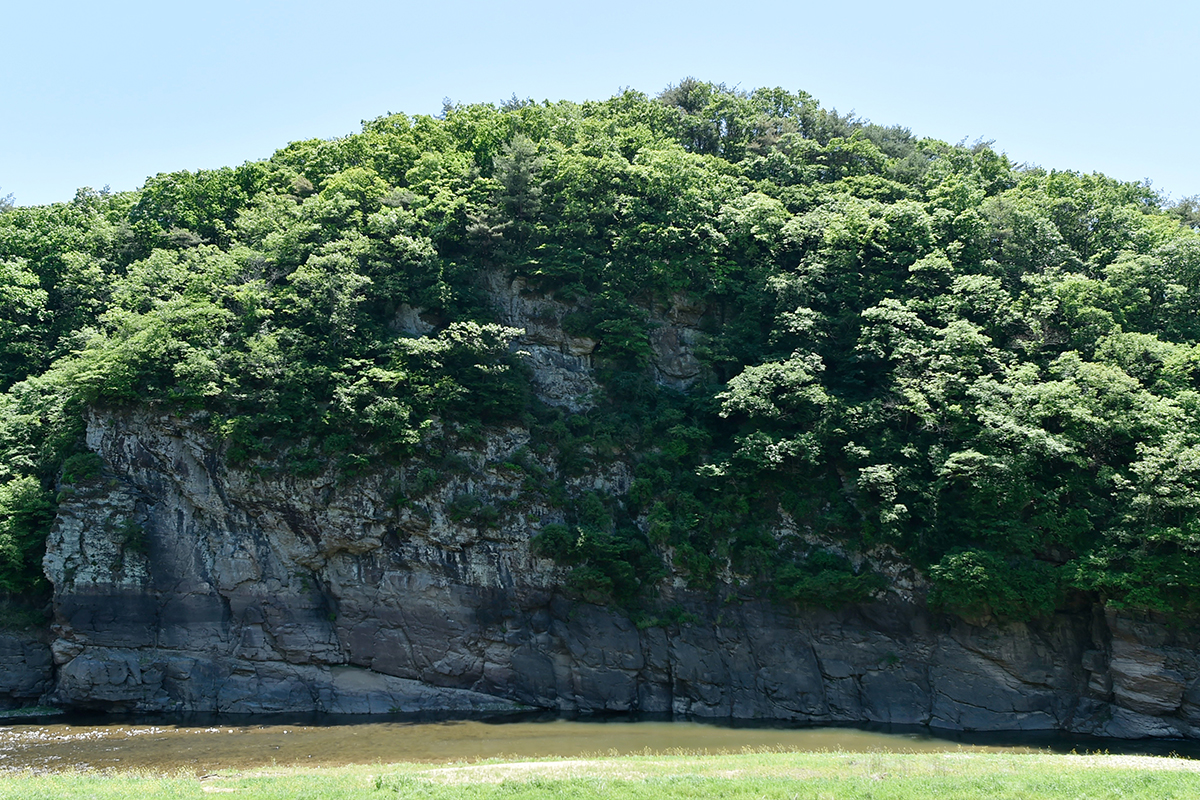
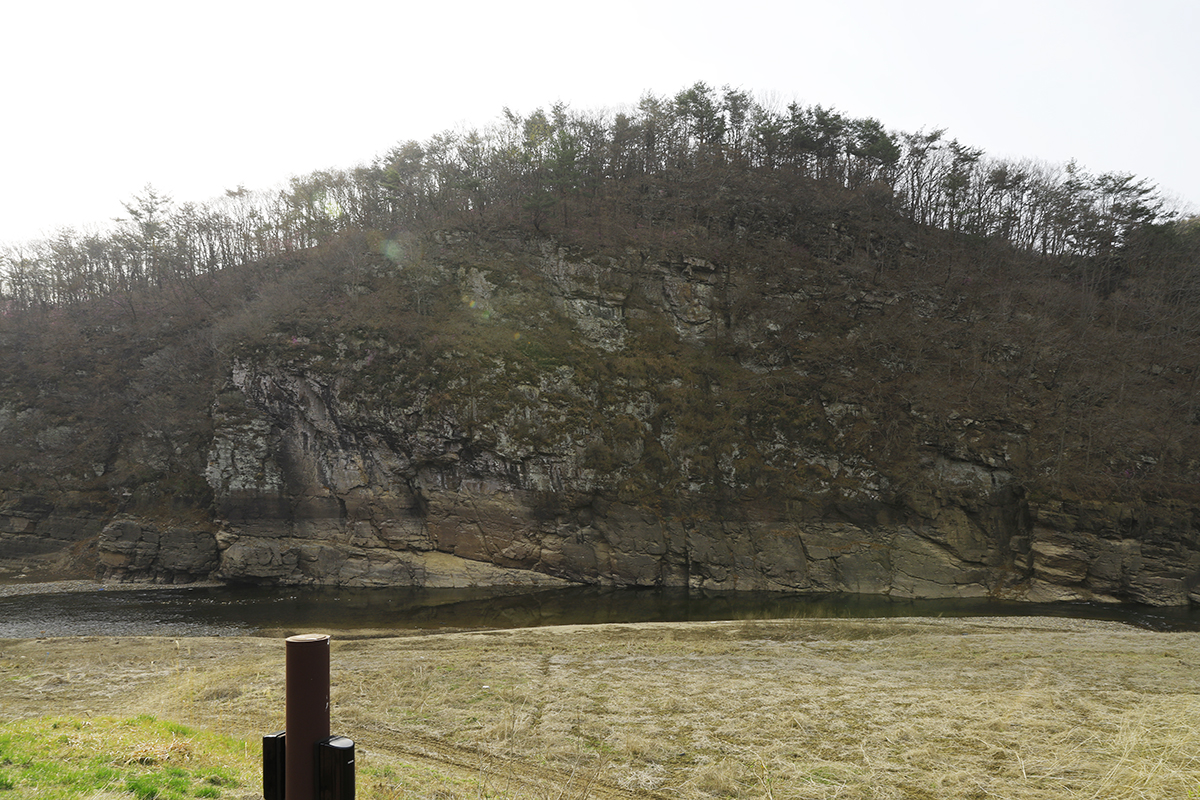
Daegokcheon is a tributary of the Taehwagang River in Ulsan. The sound of water rushing through the tranquil valley is the only thing that breaks the silence here.
There is a special boulder here.A special boulder in Ulsan.. Hey Suji, can you guess which boulder I’m talking about?
[Woman]
Of course, I can. You’re talking about the “Petroglyph Rock,” right? Petroglyphs are found almost all over the world across different points in time, and they are known as the oldest form of art created by humans.
[Man]
You’re absolutely right. features more than 300 pieces of illustrations scattered
across an 8m x 5m patch of rock face on a cliff. Most of the illustrations depict marine animals such as sharks and seals, or land animals such as deer and tigers. But, if you take a closer look, you might find something strange.
[Woman]
Let me see... you said most of the drawings are about animals...But here, the Petroglyphs at the Bangudae Terrace seem to have a lot of whales!
[Man]
You’re right. In total, there are 58 whales. Whales live in the deep ocean. Why do you think people drew whales on a rock in the middle of the mountain?
[Interview with Park Ki-nam, a Cultural and Tourism Commentator working in the Ulsan area.]
Given the high concentration illustrations created using a side relief technique, we can estimate that the drawings were created 7,000 years ago during the prehistoric era. The Neolithic Era to be precise. The reason why there are so many whales is because our ancestors who settled in Ulsan 7,000 years ago hunted whales. Nearby, we have found artifacts such as a harpoon embedded in whale bone. That is why we think there are so many illustrations related to whaling in Bangudae.
[Woman]
Now I get it. The illustrations are so detailed, I can’t believe they’re from the Neolithic Era. Some pictures even show the detailed features of whales and depict how they like seaweed. They are so intricate, I almost think people may have actually gone into the water to observe the whales with their own eyes.
[Man]
We can enjoy these amazing pieces of art thanks to the artists astonishing powers of observation. You can spend several hours looking at different illustrations, but there is one particular picture that attracts my attention. It’s the picture of people dragging a whale that appears bigger than their boat.
[Woman]
How on earth did they manage to catch a whale that appears to be as large as a house?
[Male]
The key to answering that question lies in the Petroglyphs. Do you see that long, sharp thing jutting out of the whale’s back?
[Woman]
Is that a ‘harpoon’? You mean, those prehistoric people fought whales with harpoon?
[Man]
That’s correct. They caught giant whales with tiny harpoons that appear ridiculous compared to the size of the whales. This is a remarkable series of events that happened 7,000 years ago in the sea.
[Woman]
But, there are several other parts at the Petroglyphs at the Bangudae Terrace, apart from whale hunting, that do not make much sense. How did people manage to preserve these Petroglyphs for thousands of years?
[Man]
That involves some sophisticated calculations. Did you know that archaeologists discovered the foundations of old houses from the prehistoric period near the banks of Taehwagang River?
[Woman]
They found it on the banks of Taehwagang River... isn’t that almost 30km away from Bangudae?
[Man]
That’s right. But there is a reason why prehistoric humans traveled all the way from their houses to Bangudae. The answer lies on the top area of the rock. Bangudae has a rock that juts out between 2m to 4m out at the top like a roof. In other words, the Petroglyphs at the Bangudae Terrace was the only place in the area where people could find protection against wind, rain, or snow.
[Woman]
Wow!.. I guess all the leg work looking for clues linked to the Petroglyphs paid off.
[Interview with Park Ki-nam, a Cultural and Tourism Commentator working in the Ulsan area. ]
The Petroglyphs at the Bangudae Terrace are widely acknowledged as the first record of humans hunting whales. It contains information about the distinct maritime culture in the North Pacific during the prehistoric period, which is why it has been included in the tentative list of World Heritage Sites. Also, the illustrations of whales seems to indicate that whales were an important food source for Neolithic humans. They caught whales together as a group, and shared the meat as well
[Man]
Whalers who fought the rough seas with high hopes of a good catch tried to pass on the wisdom of whaling to their children with petroglyphs because they did not yet have a written language system. That’s why prehistoric humans drew the illustrations on the Petroglyphs at the Bangudae Terrace
Ulsan Petroglyph Museum
[Man]
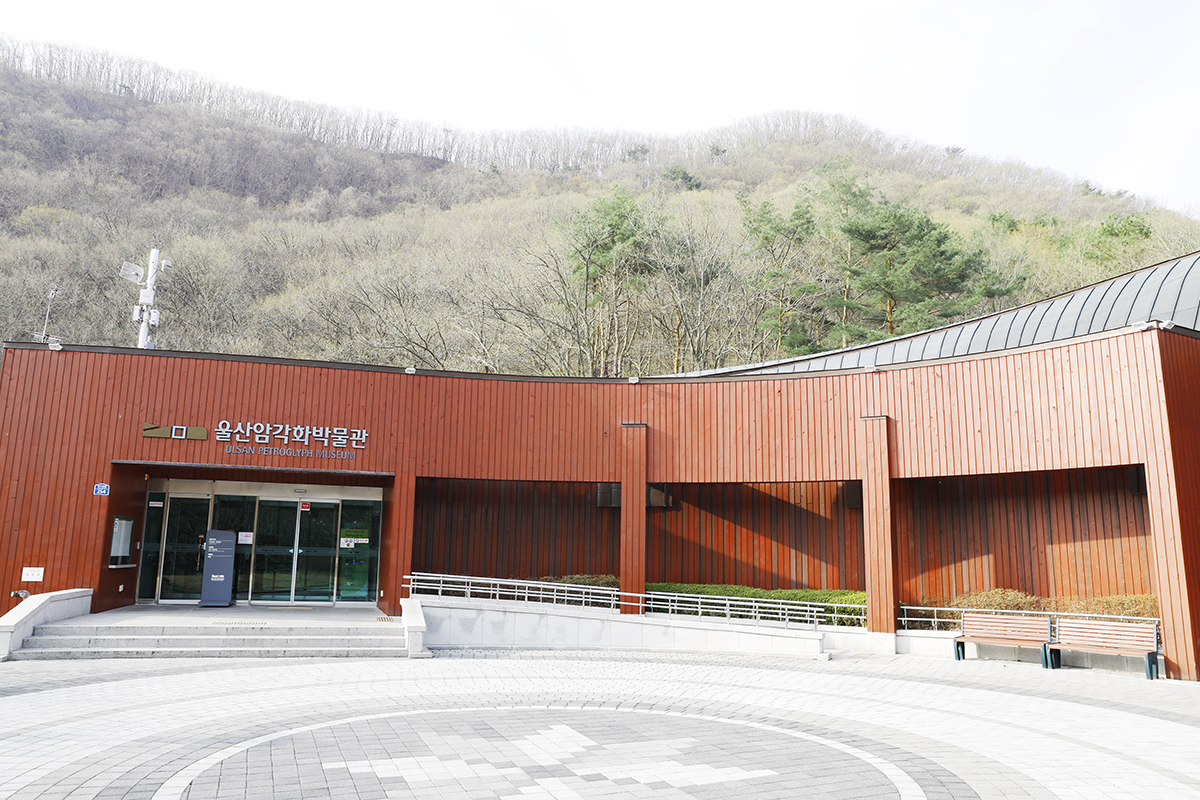
If you travel a little further from Bangudae, you’ll arrive at the Ulsan Petroglyph Museum.Also nearby is the Cheonjeon-ri valley. Cheonjeon-ri valley used to be a popular road for Hwarang cadets during the Shilla Dynasty. They even created a visitor’s log on the rocks. That’s just another thing that makes the Ulsan Petroglyph Museum so special. First of all, it’s the only petroglyph museum in Korea.
If you want to visit a petroglyph museum, Ulsan is the only place you can go to. Also, from the sky, the museum looks like a whale. The museum was built thanks to the sheer fact that Bangudae Terrace had such historically important petroglyphs.
[Woman]
If you want to learn more about petroglyphs, it might be a great idea to visit the museum and take your time touring its exhibits.
[Man]
Bangudae Terrace has beautiful petroglyphs, but it is also famous for its gorgeous scenery. “Gyeomjae” Jeong Seon, a famous painter who lived during the late Joseon Dynasty used to come to paint the landscape near Bangudae...enough said, right? Meanwhile, “Poeun” Jeong Mong-ju, a noble official who lived during the late Goryeo Dynasty, was so enamored with the strange rock formations of Bangudae when he was exiled, called it “Poeundae.”
[Woman]
Historical figures loved this place, too. All those whales in Ulsan and the Petroglyphs...I feel like really want to go on a trip now.
[Man]
If you’re heading to Ulsan, there’s another place I want to recommend.
Jangsaengpo Whale Cultural Village
[Man]
I’m talking about Jangsaengpo Whale Cultural Village.
[Woman]
I’ve heard of Jangsaengpo in Ulsan. Apparently, you can see whales in the area from time to time.
[Man]
In fact, there is an interesting story about Jangsaengpo Village. In the not-so-distant past, whaling made the entire village so rich that, people used to say, “even the village dogs carry rolls of cash.”
[Woman]
Haha! Imagine dogs around the village carrying rolls of cash... I know there’s a statue of a dog holding money in its mouth. How did people catch so many whales near Jangsaengpo?
[Man]
Well, that requires a little history lesson. In 1899, a whaling company in Russia decided to butcher whales in Jangsaengpo because they needed a whaling base to process large whales caught in the East Sea. After that, when Japan defeated Russia in the Russo-Japanese War, Japan monopolized the whaling base in Jangsaengpo. During the Japanese colonial rule of Korea, the waters near Jangsaengpo remained extremely profitable. Each year, whalers caught more than 100 whales, including gray whales and white whales. Here, Korean people mostly served as petty crewmen. But after our country won independence, Korean fishermen opened a company named the Joseon Whaling Corporation.
[Woman]
Wow. That just seems so much fairer.
[Man]
During the 1970s, whalers began using 100-ton iron ships, the whaling industry became much more substantial in size. But soon, the success story of Jangsaengpo came to an abrupt halt.
[Interview with Park Chang Hye-gyeong, a Cultural and Tourism Commentator working in the Ulsan area. ]
Jangsaengpo in Ulsan is a port city that has a rather unfortunate history. It suffered from numerous raids and attacs from Japanese pirates, and it had to endure wars such as the naval battle of Ulsan and the Korean War. Today, it has become a place where countless people visit to get a taste of how things were during the days when whaling was a prominent industry.
[Man]
Despite countless raids and attacks from Japanese pirates, Jangsaengpo survived. But, after some reckless whaling practices around the world drove a few whale species into extinction, the International Whaling Commission decided to ban all commercial whaling as of 1986.
[Woman]
That means the fishermen at Jangsaengpo lost their livelihood literally overnight.
[Man]
That’s right.. Whaling ships were moored in port, never to sail again. Soon, they disappeared into the history books.
[Woman]
Whaling used to represent a glowing dream for the fishermen in Jangsaengpo. It took up their entire lives. Does Jangsaengpo Whale Cultural Village tell the same story you just told me?
[Man]
Yes it does. Jangsaengpo Whale Cultural Village was created to show people how things looked and felt during the heyday of whaling.
[Woman]
If you take the monorail from Whale Cultural Square, you will pass by the blue skies and arrive at Jangsaengpo Whale Cultural Village! Jangsaengpo Whale Cultural Village offers plenty of features to see and enjoy, including the “Goraemadang (Whale Plaza)” that shows you the history of whales since prehistoric times, and the Whale Sculpture Park with a life-size representation of a whale.
[Man]
In particular, “Jangsaengpo Old Town” which features a diorama-like reproduction of people carrying out everyday activities is the most popular attraction among tourists.
[Woman]
From the butchery where people would butcher freshly caught whales, then onto the whale restaurant that used to sell boiled whale meat! Walking through every single street makes me feel like I’ve been transported back in time to the bustling village of Jangsaengpo.
[Man]
At one point, ‘being the county mayor or being the harpoon gunner’ was a legitimate debate.That’s how popular whaling was Another popular feature at the village is the harpoon gunners home. Wouldn’t it be fun to actually see a real harpoon gun?
[Woman]
Was harpooning like the next up-and-coming job? I bet people were rewarded quite handsomely because the success rate was so high.
[Man]
Back then, people could tell which ship had caught a whale just by listening to the horn. Watching butchers butchering a whale was like a game for the village people.
[Woman]
As the butchering comes to an end, the sun begins to set. I think I can almost hear someone’s mom yelling, “Come on in for dinner.” Jangsaengpo is an old town that brings up the nostalgia of home and feels warm and generous.
[Man]
When the time comes, whales travel the East Sea for thousands of kilometers, and return to the waters of Jangsaengpo. The reason why whales return to Jangsaengpo in Ulsan is because it is their home.
[Woman]
Jangsaengpo, on the shores of the East Sea, used to be the home of gray whales. Today, the gray whale is an endangered species. Why did gray whales call Jangsaengpo their home?
[Interview with Park Chang Hye-gyeong, a Cultural and Tourism Commentator working in the Ulsan area. ]
The tidal changes in Ulsan are not as severe as some other regions. The water is relatively shallow, and has a higher degree of salinity. These conditions make Jangsaengpo the perfect place to give birth to new calves. People also believe whales would have eaten the seaweed in Ulsan, which grows in vast quantities, to recover after giving birth to their babies.
[Woman]
Apart from Jangsaengpo, you can also see whales migrating back to Korea at ‘Cape Ganjeolgot which is the very first place in Korea where you can see the sunrise. Cape Ganjeolgot is such a popular destination, right?
[Man]
Tourists from all over country head over there on New Year’s Day. Along with Jangsaengpo, Bangeojinhang Port in Ulsan and Guryongpo Port in Pohang are famous for whale-watching. Bangeojinhang is also known for its modern history street. So, taking a tour of Bangeojinhang after Ganjeolgot and Jangsaeongpo might just be the final touch that finalizes your travel plans. Watch the sunrise at Cape Ganjeolgot, watch some whales at Jangsaengpo, and learn about local history in Bangeojinhang.
[Woman]
If you walk along the seawall at Bangeojinhang, you’ll get to see sculptures inspired by whales.Apparently, they were created on the theme of “Wish towards the sea.” If you look closer, though, you might realize that they are reproductions of illustrations from the Petroglyphs at the Bangudae Terrace.
[Man]
Thousands of years ago, prehistoric people used to hunt whales and draw their achievements on the Petroglyphs at the Bangudae Terrace.
[Woman]
Fishermen from Jangsaengpo also set sail into the open ocean with dreams of catching whales.For the locals, whales were a symbol of hope and dreams.
[Man]
The East Sea, where all the wales used to be, has a warmth that makes it feel like home. Like the whales returning home to the East Sea, we hope you can travel to Ulsan, with hopes and dreams of a better tomorrow.
Petroglyphs at the Bangudae Terrace
@Registered by : Gyeongsangbuk-Do Culture and Tourism Organization