


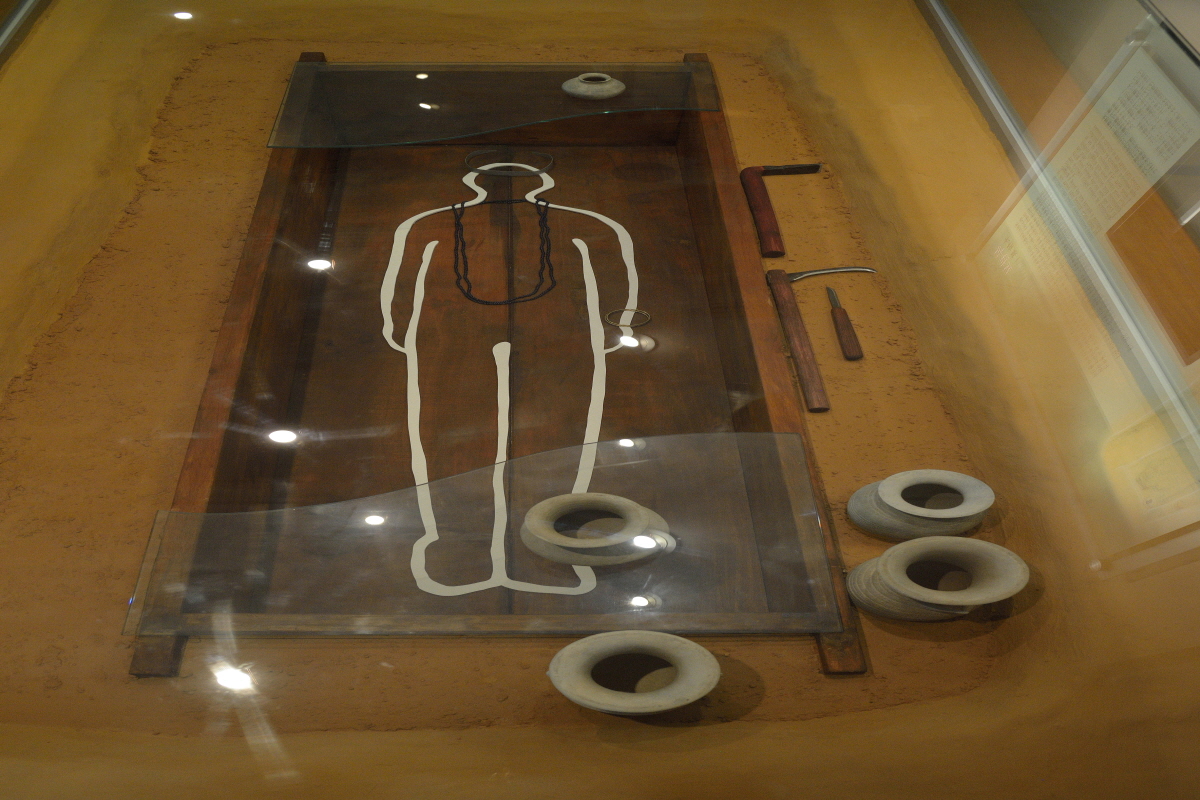
This restored artifact represents an early Gaya tomb. The deceased was laid to rest in an underground wooden coffin, a common tomb style prevalent from the 2nd century B.C. to the 2nd century A.D. This type of tomb resembles modern tombs, unlike the earlier design that accommodated numerous funerary items alongside the body.
The reproduction mirrors an ancient tomb discovered in the local area. Upon excavation, archaeologists found human bone fragments inside, aiding in the estimation that the tomb's occupant stood approximately 180 centimeters tall.
Notice the iron hat-band, the necklace made of glass beads, and the bronze bracelet adorning the deceased's wrist? During that era, glass beads held a value akin to what diamonds possess today. The ironware positioned at the foot of the coffin were skillfully crafted items originating from the northern part of the Korean Peninsula. The presence of these funerary relics signifies the wealth and status of the deceased.
As affluence and influence expanded within the kingdom, the tomb style was gradually replaced by larger tombs that gained popularity. Individuals sought to be interred with an increasing array of goods corresponding to their amassed power.
Wooden Coffin Tomb Model (Daeseong-dong Tomb Museum)
@Registered by : KOREA TOURISM ORGANIZATION