

People say that the Korean peninsula has the shape of a tiger preparing for a leap into the Maritime Province of Russia. From that perspective, Pohang is located at the tiger’s tail.
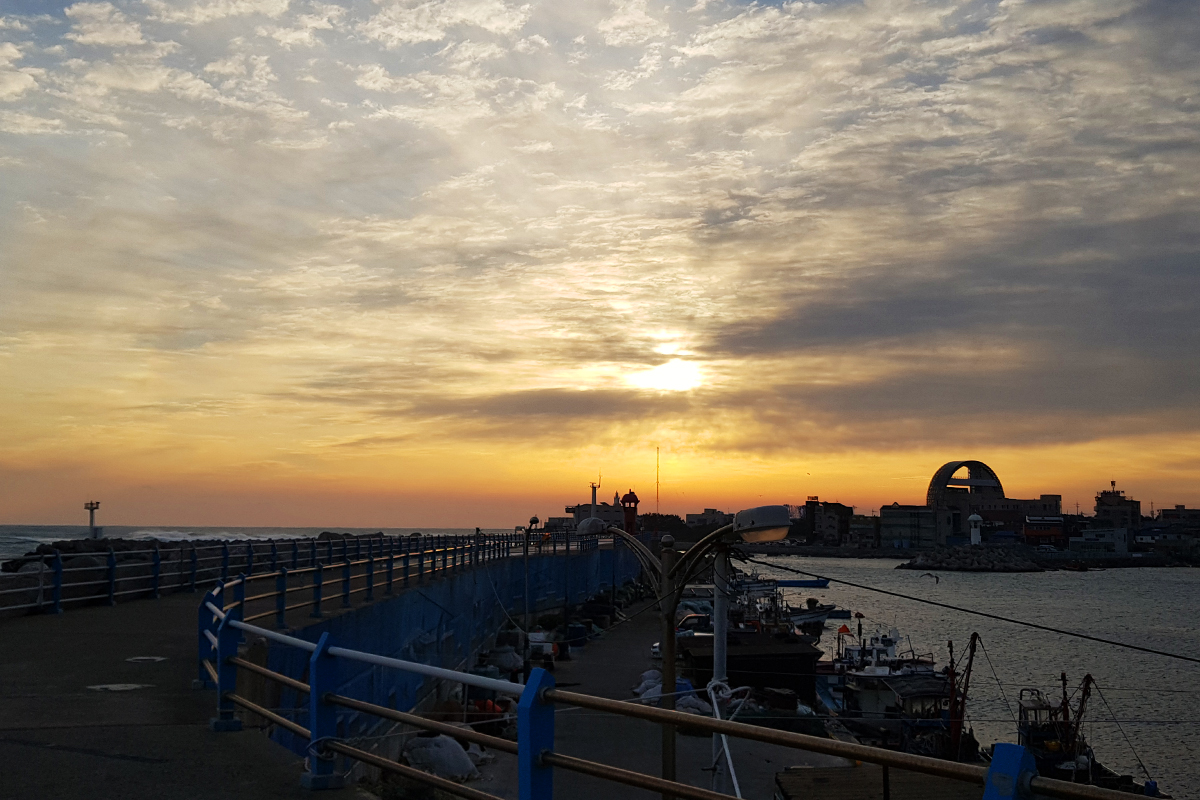
Homigot Village in Pohang is known as the home of the best sunrises in the country. The word "Got" in Homigot refers to a piece of land that protrudes into a lake or sea but is smaller than a peninsula.
There’s a secret story behind Homigot Cape dating back to the 16th century Joseon era during the reign of King Myeongjong. Nam Sa-go, a renowned Fengshui geomancy scholar, wrote about visiting the Homigot Cape and its coastline: “Geographically, this place sits where the tiger’s tail would be. It’s the most auspicious place in the land.” Tigers use their tails when they sprint forward or command others, which are the most essential ways a tiger’s energy is expressed. Therefore, Pohang’s location has been considered the symbol of the nation’s fortunes and security.
During Japan's colonization of Korea, they recognized the geographical significance of Pohang. They attempted to drive an iron stake through Homigot Cape to sever the flow of auspicious energy through Joseon. The oppression didn't end there. When a Japanese military vessel ran aground while attempting to infiltrate Joseon through the East Sea, they blamed Joseon for not having a lighthouse in the area. They argued that Joseon must pay for the damages and build a lighthouse immediately.
However, Joseon lacked technicians capable of constructing a lighthouse. Japan forced the country to invite foreign engineers at a high cost.
This is why the lighthouse in Homigot Cape was designed by French engineers and built by Chinese construction workers. The lighthouse takes the shape of an octagonal pagoda. Bricks without rebars were used in its construction. The interior comprises six floors, each bearing the pattern of a plum blossom, symbolizing the royal Korean family. Despite its creation under tragic circumstances, it has safeguarded numerous vessels passing through the East Sea for more than a hundred years.
10, Segye-ro, Wonju-si, Gangwon-do (PC) 26464
TEL : +82-33-738-3852
Copyright© Korea Tourism Organization. All Rights Reserved.