


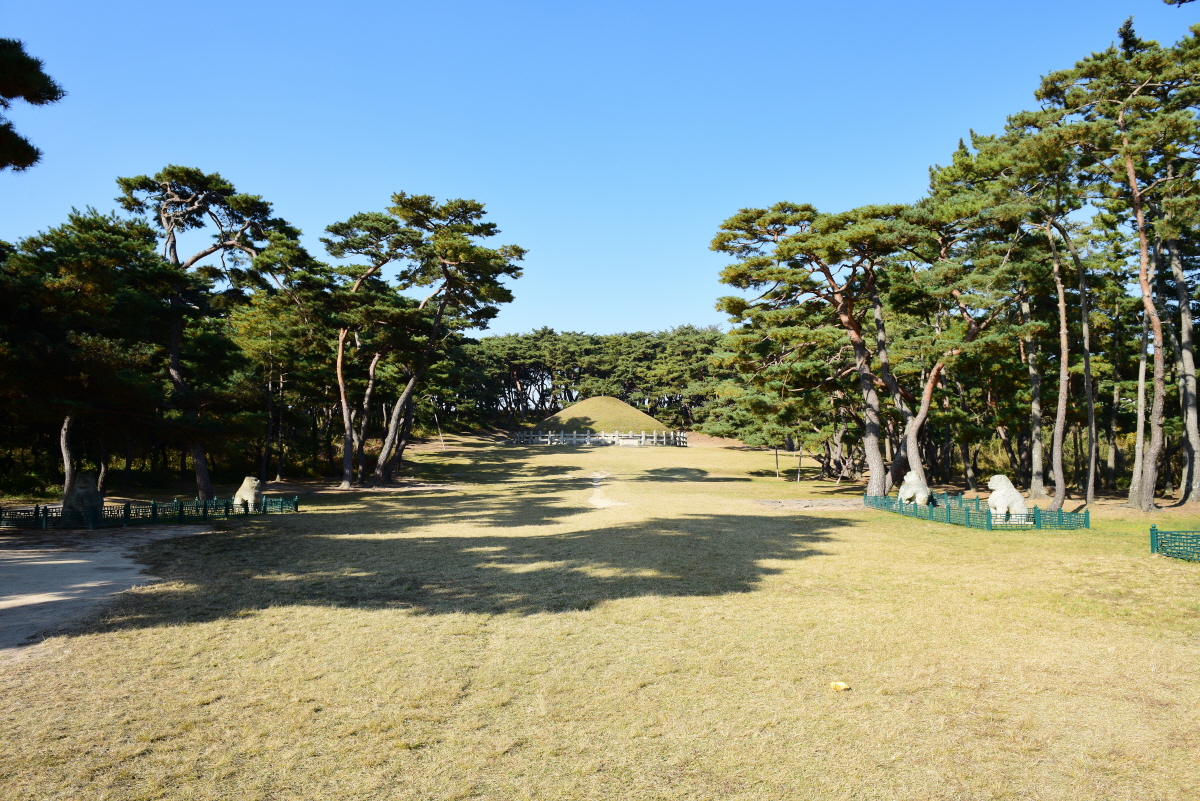
Gwaereung Tomb, The evidence of active cultural exchange during the Silla period
[Teacher]
This is the tomb of a Silla king. The name Gwaereung refers to "hanging the coffin."
[Student]
You mean hanging a corpse in the air? Why?
[Teacher]
According to legend, originally there was a small pond here. After the king died, they tried to fill the pond with dirt to build the king's tomb on top of it. But strangely, water kept leaking out of the ground. So they had no choice but to hang the coffin on a tree or a stone until the groundwork was completed.
Probably this legend indicates that some special groundwork was done here.
[Student]
Oh, I see. But imagine the king's body hanging in the air. It's creepy!
[Teacher]
Is it? Also, this tomb offers the evidence that Silla had cultural exchanges with Arabia.
[Student]
Did Arabia and Silla have exchanges?
[Teacher]
Yes. In Silla, international trade, particularly maritime trade, was very active.
Many merchants from overseas came to Silla's port and some of them were Arabian merchants.
Also, glass bowls remarkably similar to those in Arabia were found in other tombs from Silla.
Also, what's interesting is the stone statues in this tomb look just like Arabs.
[Student]
Wow! Silla was not a small isolated kingdom of East Asia. Let's go check out the stone statues.
[Teacher]
Sure. I'll tell you more while you are looking at the statues.
Gwaereung(Tomb of King Wonseong in Gyeongju): At the entrance of Gwaereung Tomb
@Registered by : KOREA TOURISM ORGANIZATION