


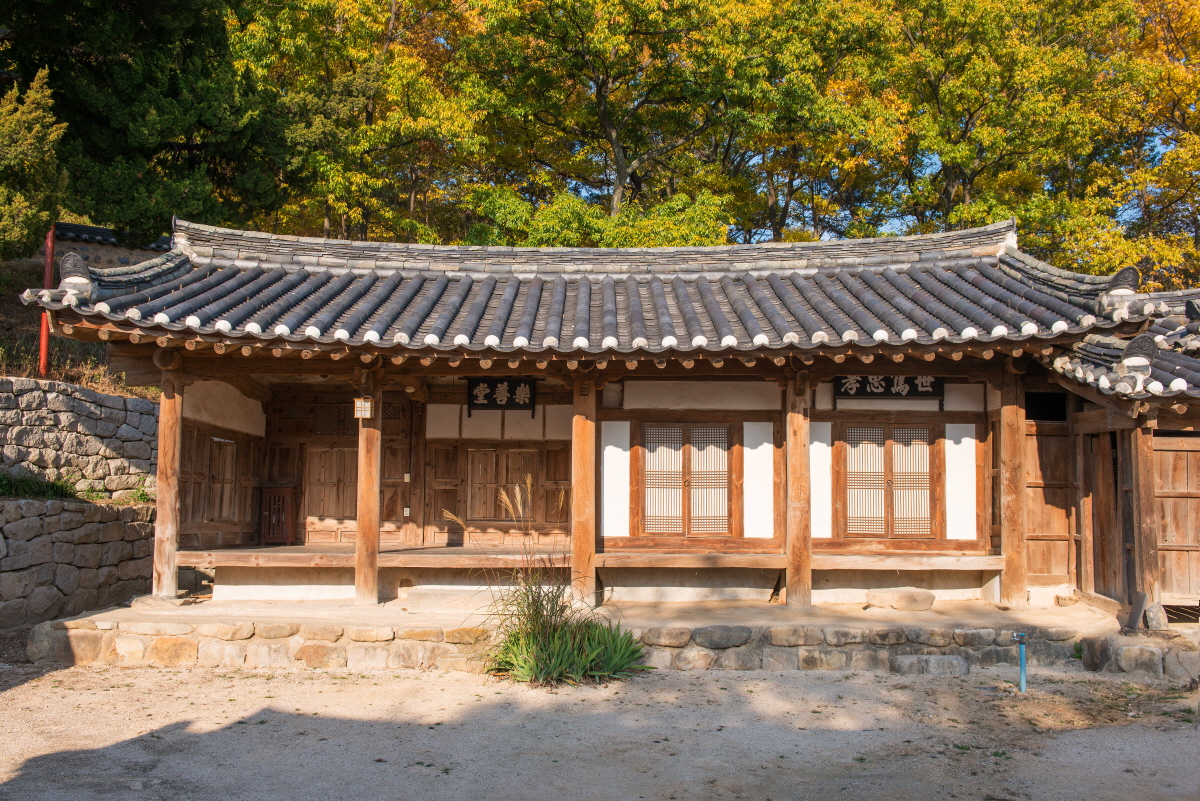
Nakseondang House stands as a tribute to a man named Son Jong-ro. In 1636, during the conflict between Joseon and the invading Qing Empire of China, Son Jong-ro served as an official in the local government.
Upon the outbreak of war, he decided to go to the capital, realizing the dire state of the country and feeling compelled to defend the king. Recognizing the uncertainty of the situation, he refrained from asking his people to accompany him, mindful that they might never return home.
However, his servant, Eokbu, volunteered to follow. Feeling indebted to the government due to his association with Son Jong-ro, the servant vowed to stand by his master till the end.
Tragically, both men lost their lives on the battlefield, their bodies never recovered. With no remains to conduct proper funerals, the surviving family utilized their clothes as substitutes. Consequently, Nakseondang House became a memorial honouring the courage and sacrifice of Son Jong-ro and Eokbu.
At the village entrance, there is a memorial monument established by royal command to commemorate the loyalty of Son Jong-ro, while another adjacent monument is dedicated to his loyal servant.
10, Segye-ro, Wonju-si, Gangwon-do (PC) 26464
TEL : +82-33-738-3852
Copyright© Korea Tourism Organization. All Rights Reserved.